Carrara is a charming Italian town, located in the region of Tuscany, in the northwest of the peninsula. It is known worldwide for being the epicenter of marble extraction and processing. The city, rich in history and art, is located between the slopes of the Tuscan-Emilian Apennines and the Ligurian Sea, surrounded by a surprisingly beautiful landscape. Carrara has an exceptional geological wealth, with its mountains of pure white marble, shining in the sunlight, creating a unique landscape. These natural treasures have made Carrara popular worldwide, attracting artists, sculptors, and architects over the centuries. In fact, Carrara marble has been chosen to create some of the most famous works of art and architecture in the world, including Michelangelo's David. In addition to its marble-related fame, Carrara can also boast a vibrant historical past. Some evidence of its ancient origins can be seen in some areas of the city, with remains of settlements dating back to prehistoric and Roman times. During the Middle Ages, the city experienced a period of great prosperity, becoming an important center for trade and art, thanks to its strategic position between the sea and the mountains. One of the most fascinating aspects of Carrara is its architecture. The city boasts a series of historic buildings that reflect architectural styles from different eras. There are elegant palaces from the Renaissance and Baroque periods, fascinating churches with interiors carved in local marble, and sumptuous villas dating back to the 18th century. Piazza Alberica, the main square of the city, is an extraordinary example of this architectural heritage. But Carrara is not just history and architecture. It is a lively and vibrant city, with a vibrant cultural scene. Here you will find the Academy of Fine Arts, one of the oldest and most prestigious art schools in Italy, where students come from all over the world to learn the techniques of marble sculpture. Additionally, the city hosts a series of artistic and cultural events that celebrate its connection with marble, such as the International Sculpture Biennale. Finally, Carrara is also a place where you can savor delicious Tuscan cuisine. Here you can taste traditional dishes such as lardo di Colonnata, castagnaccio, and testaroli, accompanied by excellent local wines. In conclusion, Carrara is a fascinating and lively city. Whether you are an art lover, a history enthusiast, an admirer of architecture, or a foodie, Carrara has something to offer everyone. Not only is it proud of its glorious past and its tradition in marble extraction, but it is also a city that looks to the future, committed to promoting art, culture, and its natural heritage.
No membership group specified.
Carrara, a small gem located in the heart of Tuscany, is renowned for its local enterprises and for that fantastic blend of tradition and innovation that characterizes it. In recent decades, a series of industries and companies have thrived, allowing the municipality to achieve extraordinary standards in various sectors, making it a point of reference for many economic entities at regional, national, and often international levels. The flagship sector of the Carrara economy is undoubtedly that of quarries and marble extraction. Carrara is universally known as the 'marble capital of the world': this white and precious material is an integral part of the municipality's DNA and a symbol of its historical, artistic, and economic wealth. Local businesses have specialized in this activity, establishing themselves worldwide and creating a complete supply chain ranging from extraction to processing, to the trade of marble. Products derived from Carrara marble are in demand and appreciated worldwide, and are regular protagonists in works of art, luxury furnishings, and prestigious constructions. Another significant sector in the local economy is certainly that of manufacturing, with a wide range of small and medium-sized enterprises producing various types of products, from metal components to electronic equipment. In particular, Carrara has developed a strong specialization in precision mechanics and advanced electronics over time, with companies working for clients from all over the globe and boasting collaborations with important international groups. There is also the agri-food sector, with companies producing wines, extra virgin olive oil, honey, cheeses, and other high-quality typical products, closely linked to the territory and highly appreciated both in Italy and abroad. In this regard, the local area is rich in small producers who, with great passion and dedication, cultivate the land according to traditional rhythms and methods, contributing to keeping alive the authentic essence of these lands. Finally, we cannot forget the role of tourism, which attracts thousands annually thanks to the wonders that Carrara and its territory offer. Local hospitality is expressed through an articulated network of accommodation facilities, from hotels to bed & breakfasts, from restaurants to wineries, and wine and food tourism, which enhance the products of the territory and contribute to making the riches of Carrara known to the world. In summary, the local businesses of Carrara represent a perfect blend of tradition and innovation, capable of merging respect for the territory and its peculiarities with the ambition to grow and renew. While the historical vocation for activities related to marble testifies to loyalty to the roots, the openness to various other sectors demonstrates a remarkable capacity for adaptation and a well-rooted entrepreneurial spirit. In this way, Carrara not only manages to protect its identity but also to project itself towards the future with optimism and determination.
Carrara, with its ISTAT code 45003, is a municipality located in the northwest Tuscan region of Italy. This is a historic city, renowned for its high-quality marble, which has been used worldwide to build monuments and buildings of significant importance. The demographic situation of Carrara is balanced between men and women, with a total of 59,757 inhabitants, of which 28,979 are men and 30,778 are women. This suggests a social context of relative gender equality. It is also worth noting the modest but significant number of foreign residents, totaling 5,411, which adds a multicultural component to the city's social fabric, potentially fostering greater diversity and creativity. In terms of housing, Carrara boasts over 36,000 housing units, of which about a quarter are currently unoccupied. This could lay the groundwork for potential real estate investments, particularly for the development of luxury housing or tourist accommodation. From an economic perspective, Carrara offers various investment opportunities in the tourism sector. The city has a total of 64 accommodation facilities, ranging from bed and breakfasts to campgrounds and agritourisms, with a total capacity of over 1,499 beds. However, the presence of high-end hotel facilities, such as 4 and 5-star hotels, appears to be lacking, indicating an opportunity not yet fully exploited for potential investors interested in a more luxurious market segment. Furthermore, Carrara possesses a considerable historical and cultural heritage, with three museum institutions that attract a decent flow of visitors every year. Investment in cultural or artistic projects related to the uniqueness and richness of Carrara marble could therefore prove to be a profitable and sustainable choice. Geographically, Carrara enjoys a privileged location both for its proximity to the sea, being a coastal municipality, and for the presence of mountains. It is located in an area with intermediate population density and is easily accessible through various transportation options, with railway stations, highway access, airports, and ports all within a less than an hour's drive. In summary, Carrara deserves to be considered for investments due to its cultural heritage, privileged geographical location, demographic size and structure, as well as the numerous development opportunities in the real estate and tourism sectors.
Carrara, a masterpiece of marble and culture in the beautiful region of Tuscany, offers a myriad of attractions that enchant visitors with their beauty and history. A fascinating and dynamic city, Carrara is famous for its white marble quarries, priceless treasures that represent one of the region's main resources. The mountainous landscape is characterized by these impressive quarries, which blend majestically into the natural setting. Not to be missed is a thrilling tour inside the quarries themselves, accompanied by expert guides, to discover the secrets of marble processing. The city proudly preserves a rich artistic and cultural heritage, including excellent examples of architecture and places of worship of great interest. The center of religious life in Carrara is the Cathedral of Sant'Andrea, built between the 11th and 14th centuries in the Pisan-Romanesque style. Enriched with precious marbles, the church's façade features a bas-relief depicting the Resurrection and Twelve Prophets, a 14th-century masterpiece. Equally fascinating is the 17th-century Church of Suffragio. Its distinctive bell tower, known as the "Campanaccio," is the tallest in the city and offers a breathtaking panoramic view. As for monuments, Piazza Alberica is the beating heart of Carrara. Here stands Palazzo Alberico Cybo Malaspina, a magnificent example of Renaissance architecture, once the residence of Marquis Alberico I Cybo Malaspina. The opulent and imposing statue of the Marquis also captures attention, as does the Teatro degli Animosi, one of the oldest in Tuscany, which remains a vibrant center for the performing arts. Culture in Carrara isn't limited to art and history: the city is a vibrant stage for events and festivals. One of the most important is the International Sculpture Biennial, which attracts artists from around the world. There are also plenty of opportunities to celebrate local traditions, such as the July 24th festival in honor of the patron saint, San Ceccardo. During the festival, the city comes alive with solemn processions, fireworks displays, and markets selling traditional products. Local cuisine is also a must-see. Lardo di Colonnata, a rich and creamy delicacy cured in marble basins, is just one example of the culinary delights Carrara has to offer. A visit to Carrara would not be complete without an excursion to the Apuan Alps Park, with its hiking trails and spectacular panoramic views. Traveling to Carrara thus offers a dazzling array of experiences, encompassing art, history, nature, and gastronomy—an adventure that engages all the senses, in a setting of priceless beauty.
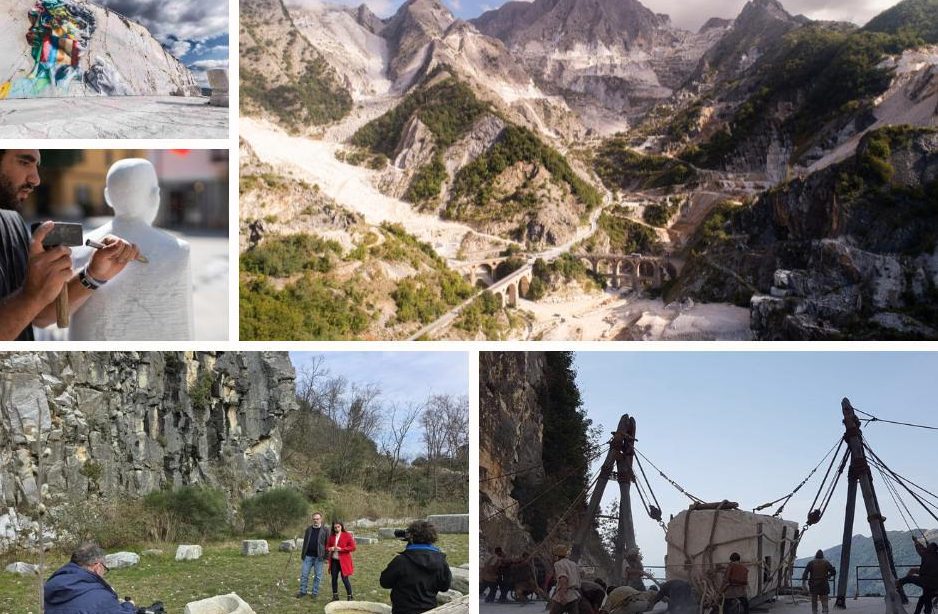 Carrara, dalle cave di marmo ai set cinematografici04 marzo 2025
 Capitale arte contemporanea 2026, la designazione entro ottobre18 ottobre 2024
 Inaugurata a Carrara ‘Vita all’aria aperta’, segmento camper in Italia frutta 800 mln04 febbraio 2019
 Unesco proclama Milano, Alba, Pesaro, Carrara città creative02 novembre 2017
 Vita all’aria aperta protagonista del 15° Carrara Tour.it26 gennaio 2017
 Presidio balneari a Carrara contro stop a proroga concessioni01 marzo 2016