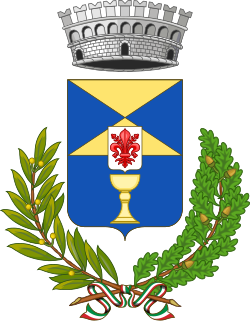
In the heart of the picturesque region of Tuscany, within the province of Florence, lies the tranquil town of Dicomano. This picturesque location is situated at an altitude of about 150 meters above sea level and covers an area of 73.38 square kilometers. The green hills and fertile valleys of the Florentine countryside make up its natural landscape, which is imbued with a charm steeped in history and culture. Dicomano has been an autonomous municipality since 1865, when it became part of the Kingdom of Italy. Its history is as ancient as its natural beauty. It takes its name from the Comano stream that runs through it, and has Latin etymological roots: "De Comane" means "coming from Comano". In turn, Comano may derive from Comanum, an ancient Etruscan place name. Dicomano has a typically Mediterranean climate with mild winters and hot summers. This has allowed for the development of a wide variety of flora typical of the region, painting the landscapes of the municipality with its rich colors. The population of the municipality is relatively small, with less than 5,000 inhabitants spread out in both the main residential area and the hamlets of Dicomano. Among these, Villore, the furthest hamlet from the center, and Corella, the closest, should be mentioned. Each hamlet has its own distinct identity, with unique local traditions linked to the history and culture of the municipality. From a cultural perspective, Dicomano has much to offer. Its historical roots date back to the Etruscan and Roman eras, with archaeological finds testifying to the presence of inhabited settlements since the 3rd century BC. Throughout the centuries, Dicomano has passed from one domain to another, reflecting the influences of various historical periods. Before the arrival of the Romans, the territory was inhabited by the Etruscans, who left important traces of their presence. During the Middle Ages, Dicomano was an important center for commercial exchanges, thanks to its strategic position between Florence and the Tuscan-Romagnolo Apennines. The imprint of these ancient peoples is still visible in the architectural structures of the municipality, enriched by elements from the Roman, medieval, and Renaissance periods. The presence of castles, ancient churches, and historic villas contributes to the preservation of Dicomano's rich historical heritage. Life in Dicomano maintains the typical slow pace of small towns, with its inhabitants dedicated to agriculture and livestock farming, activities that have always been the foundation of the local economy. In conclusion, Dicomano can be described as a place rich in rural charm, with a peaceful atmosphere and a deep identity. The combination of natural beauty with a culturally significant heritage makes Dicomano a fascinating destination, where one can enjoy a unique connection with the history and culture of Tuscany.
No membership group specified.
In the picturesque town of Dicomano, located in the heart of Tuscany, local businesses thrive, fueled by the wealth of natural resources in the area and the indomitable entrepreneurial spirit of its inhabitants. The economic sectors that prosper in Dicomano are diverse, with a strong focus on agriculture, wine production, catering, and tourist services. The fertile land and mild climate make agriculture one of the main economic pillars of the town, where the production of high-quality olive oil and vegetables has been taking place for centuries. Family-run farms, which often adopt organic cultivation techniques, dominate the landscape, offering a charming view of the rolling hills cultivated with olive trees and vines. Farmers produce a rich variety of local products, from fresh fruits and vegetables to cereals, herbs, and flowers. Thanks to their high quality and freshness, these products are very popular among both locals and the numerous tourists who visit Dicomano. The wine sector is another pillar of the local economy. The area surrounding Dicomano is renowned for its vineyards, which produce superb quality wines, highly appreciated and recognized internationally. From small artisanal wineries to larger and more modern facilities, wineries produce a variety of wines, ranging from classic Tuscan reds to fresh whites, sweet wines, and sparkling wines. Dicomano also offers a wide variety of restaurants and cafes, ranging from classic Tuscan osterias to modern venues with international influences. These restaurants provide an excellent opportunity for visitors to experience delicious Tuscan cuisine, enriched by fresh local seasonal products. The tourism industry is another vital sector for the economy of Dicomano, with a high number of visitors flocking to the area every year. Local tourism businesses offer a wide range of services, from luxury holiday homes to picturesque bed and breakfasts, from agritourism accommodations immersed in nature to campsites with all amenities. These facilities offer a warm welcome and unparalleled hospitality, allowing visitors to experience an authentic Tuscan lifestyle. Dicomano's businesses certainly do not limit themselves to these sectors. The entrepreneurial community boasts a wide range of activities, ranging from local craft shops to professional consulting services, beauty salons, gyms, specialized grocery stores, and traditional bakeries. In Dicomano, the ancient flavor of tradition skillfully blends with contemporary needs, giving rise to a rich and dynamic economic fabric. Local businesses, with their commitment and passion, contribute to making the town of Dicomano a place worth living, working, and visiting.
The municipality of Dicomano, identified by the ISTAT code 48013, is located in the agricultural region of the Mugello Hills. It is a territory that boasts a total area of 61.6319 sq km, predominantly hilly, with 48.62528234% of the area between 300 and 599 meters above sea level and 23.03528312% below 299 meters. Its geographical centrality is at 162 meters above sea level. The population consists of 5534 residents, with a slight male predominance (2825 men against 2709 women). There is also a significant presence of foreign citizens, amounting to 827 individuals, confirming an open and multicultural context. The residential fabric of Dicomano, as of December 31, 2021, tells of 2364 occupied dwellings and another 794 unoccupied, for a total of 3164 dwellings. This data may indicate a potential availability in the real estate sector and therefore make the sector interesting for real estate investments. In terms of tourist facilities, Dicomano does not have hotels, campsites, tourist villages, or tourist residences. However, the presence of 3783 beds distributed among 1447 rooms suggests a strong presence of high-level hospitality structures. The breakdown reveals the availability of 5 guesthouses, 15 agritourisms, and a bed & breakfast. The non-hotel offer includes 21 establishments and 342 beds. This testifies to a specific vocation of the area towards rural and environmental tourism, encouraging possible investments in this sector. From a cultural point of view, the municipality has only one museum institute, which recorded 640 visitors in 2020. This aspect could represent an incentive to develop the cultural sector, making the territory more attractive to tourists and potential residents. Finally, it is important to observe the data regarding infrastructure and accessibility. Dicomano is served by a railway station with active passenger service (distance in minutes: 51), access to the motorway network (distance in minutes: 34), and an airport (distance in minutes: 58). The nearest passenger port is 107 minutes away. These elements reveal a good degree of interconnection of the territory, despite not being a coastal or island municipality, and residing in a sparsely populated area. In conclusion, Dicomano offers various opportunities for investors, especially in the real estate and tourism sectors, where commitment could lead to a significant increase in cultural and tourist services, consolidating and enriching the existing offer. The presence of unoccupied dwellings and the territory's vocation towards a more sustainable tourism in contact with nature, combined with reasonable infrastructural accessibility, constitute solid starting points for the development of innovative and sustainable projects.
Nestled in the green hills of the Tuscan region, the municipality of Dicomano offers a picturesque and fascinating setting, characterized by an incredible variety of cultural, historical, and natural treasures. One of the first that deserves to be mentioned is Piazza Buonamici, the heart of the town and its vibrant social fabric. Here you can admire works of great historical and artistic value, such as the Renaissance Loggia dei Vicari and the ancient church of Santa Maria. The church of Santa Maria, dedicated to the Patron Saint of the town, houses incredible art treasures, such as valuable frescoes and wooden sculptures, testifying to the religious fervor and artistic skill of the ancient inhabitants of Dicomano. A few steps away is the splendid Palazzo Ducci di Dicomano, which houses the Municipal Library and the District Archaeological Museum, collecting and exhibiting valuable artifacts from the surrounding area, a testament to the rich and ancient local heritage. The Bell of Unity and Peace, erected in 2000 to celebrate the millennium, is another monument that enchants for its history and the important message it conveys. It is a testimony to the will to remember the values of unity and peace, fundamental for the community of Dicomano and for all humanity. Dicomano is not only art and culture; nature plays a leading role in the local landscape. The Casentino Forests National Park is a true biodiversity oasis, where you can take long walks immersed in vegetation, admiring the local fauna and enjoying the peaceful atmosphere of the place. The inland churches, such as San Pietro a Vico and San Leolino, house treasures of rare beauty, all waiting to be discovered. The Church of San Pietro a Vico, dating back to the 10th century, is characterized by a two-light sail bell tower, while the recently restored Church of San Leolino is known for its ancient origins, dating back to the 11th century. Not to be missed in Dicomano are the local traditions, expressed in unique events such as the feast of San Lorenzo, celebrated on the third Sunday of September. This feast is an expression of the community's deep religious devotion and an opportunity for aggregation, realized through processions, masses, and a large outdoor party, during which you can taste the local cuisine, with ancient recipes, authentic scents, and local products. Finally, but not least, the Chestnut Festival, a highly anticipated gastronomic event that takes place in October. During the festival, you can taste local delicacies based on this autumn fruit, such as the famous chestnut fritters and chestnut cake, not to mention honey and wine, other typical products of Dicomano. In summary, Dicomano is a municipality rich in attractions, offering a complete experience that can satisfy both art and history enthusiasts and lovers of nature and local traditions.