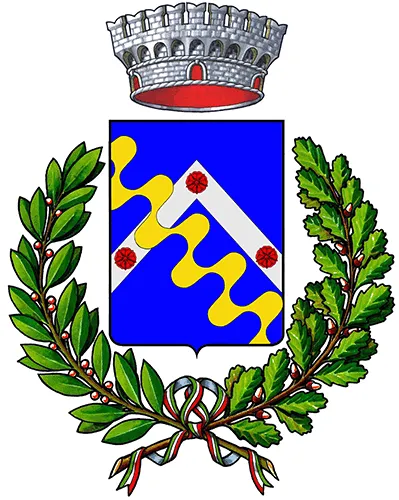
Londa is a fascinating Italian municipality, a real journey through history, art, culture, and nature. Located in the region of Tuscany, specifically in the province of Florence, Londa reveals its charm among the gentle hills of the Tuscan Apennines, where nature has sculpted scenarios of unsurpassed beauty. With an area of 72 square kilometers, Londa is located at an altitude of about 357 meters above sea level and retains the flavor of a small village where life flows slowly and peacefully. The over one thousand inhabitants of Londa are mainly dedicated to the production of olives and wine, preserving an agricultural tradition that reflects the authentic spirit of the place. In addition, in recent years, there has been a significant tourist movement, thanks to the privileged position of the municipality, bordered by the Sieve river and the Rincine stream, and its historical and artistic heritage. One of the most fascinating aspects of Londa is undoubtedly its history. The municipality owes its name to the Lombards, a Germanic people who invaded northern Italy in the 6th century, giving rise to the eponymous kingdom. Since then, Londa has experienced numerous historical periods, reflecting their forms, colors, and flavors. During the barbarian invasions, it was heavily damaged, but overcame the calamities to flourish again in the Middle Ages as an integral part of the Florentine Republic. The years of Florentine domination have given Londa its Renaissance charm, visible in the urban fabric characterized by buildings of ancient flavor. It is during this historical period that Londa experienced its maximum demographic development, although it suffered a decrease in population during the nineteenth century, due to emigration to urban centers or abroad. Londa offers a diversified environmental context, dominated by wooded mountainous reliefs and river valleys. Protected to the north by the massif of Monte Falterona, the vegetation is mainly composed of chestnut trees and, at higher altitudes, spruces and beeches. Furthermore, a good part of the municipal territory is a nature reserve, part of the National Park of the Casentino Forests, Monte Falterona, and Campigna. The urban square offers a landscape rich in vegetation where the green of the trees blends with the ancient pink of the palaces, creating a suggestive atmosphere that smells of antiquity. At the same time, the currents of the Sieve river and the Rincine stream, which border the communal territory, give a breath of freshness and liveliness, breaking the visual monotony. A walk through the alleys of Londa promises unique paths, picturesque views, where the scents of tradition blend with the notes of an intangible melody, in a continuous dialogue with the past. Every corner, every stone, tells a story, which resonates in the ears of anyone who decides to walk its paths. In its years of existence, Londa has managed to maintain its authenticity intact, giving its visitors a unique experience, a journey through time, among the pages of a millennia-old history. A place to rediscover the pleasure of contemplation, letting oneself be enveloped by an aura of tranquility and well-being, typical characteristics of life in a small village.
No membership group specified.
If you stop to reflect on the intrinsic beauty of the local businesses in the Tuscan town of Londa, you may be amazed at how much they can tell about the history, soul, and energy of a community. This picturesque village is the beating heart of an economy based on olive oil and wine production. As soon as you cross the municipal borders, you are greeted by expanses of green, a sign of the deep connection of the Londa community to sustainable and valuable agriculture. The olive groves and vineyards testify to the importance of olive growing and winemaking, driving sectors of the local economy and representing the Tuscan quality worldwide. One company worth mentioning is the Organic Farm Latini. They manage over ten hectares of land dedicated to the cultivation of organic products, including wine, oil, cereals, and vegetables. Their deep respect for the environment and the territory has led to a sustainable business model and strengthened the reputation of the municipality. Continuing along the picturesque streets of Londa, you will come across the Masaccio farm, renowned for the production of delicious extra virgin olive oil and fine wines. Their products are the result of a careful balance between tradition and innovation, being produced with ancient methods but with the help of modern technologies. They are undoubtedly one of the shining gems in the crown of the local agricultural industry. Another hidden gem among the hills of Londa is Piccolo Mondo, a family winery that has turned their passion for winemaking into a profession. Their production of red and white wines is the result of a love for the land and respect for Tuscan winemaking tradition, and is appreciated both locally and internationally. However, the entrepreneurial effervescence of Londa is not limited to agricultural production. The area is also home to small artisan industries that help keep alive the traditions of the past. For example, the artistic ceramic workshop of Emma Berti, whose creations have earned a place of honor in the panorama of Tuscan craftsmanship, and the small woodworking workshop "Gli Artigiani," which skillfully manufacture furniture and furnishings in rustic Tuscan style. Last but not least, Londa is also home to several commercial activities, most of which are family-run, offering top-quality products and a warm and genuine welcome, just like the one you can find in the heart of Tuscany. The businesses of Londa, with their variety and dedication, tell of a lively and industrious territory, where passion for one's work and love for one's land are indispensable values. They testify to the beauty of a municipality that, while remaining faithful to its roots, wants to continue to grow and enhance its heritage of ancient traditions and crafts.
The municipality of Londa, identified by the ISTAT code 48025, is a rural area among the hills of Tuscany. With an area of 59.29 square kilometers, and a population of 1826 inhabitants, of which 943 are male and 883 are female, the territory offers a glimpse of authenticity and tranquility also thanks to its location in a sparsely populated region. From a demographic point of view, we note the presence of a significant foreign population of 173 individuals, with a slight prevalence of females. In terms of housing, as of December 31, 2021, Londa has 1302 dwellings, of which 816 are occupied and 486 are unoccupied, a data that may suggest a certain mobility of the inhabitants, or alternatively, available spaces for new residents. The altitude of the center of the municipality is 226 meters above sea level, and the altimetric bands of the territory highlight a good geographical variety, with a predominance of heights between 600 and 899 meters, followed by bands between 300 and 599 meters and between 900 and 1199 meters. This morphology suggests a hilly environment, with potential for outdoor activities and rural tourism. Despite the area not being urbanized and lacking hotel infrastructure, statistics report the presence of 12 non-hotel establishments offering a total of 308 beds. Among these, a campsite with 195 beds, 5 rental accommodations managed as a business with 66 beds, 4 agritourisms with 32 beds, and a bed & breakfast with 4 beds. This accommodation offer places Londa as an ideal destination for outdoor tourism and an authentic experience of Italian rural life. The area belongs to the "Alto Santerno e Alto Lamone" Agricultural Region, a testimony to a strong agricultural vocation that makes the sector interesting for investments, considering the growing demand for organic and typical local products. From a logistical point of view, Londa is relatively accessible, with active railway stations located at a distance of 51 minutes, access to the highway network at 38 minutes, airports at 67 minutes, and ports with passenger service at 113 minutes. These data make the municipality reachable from major urban centers and the national and international transport network. In conclusion, despite its limited size and the lack of mainstream tourist offerings, Londa presents several investment opportunities. The real estate sector offers unoccupied spaces; the accommodation offer, although unconventional, is varied and able to accommodate tourism seeking unique experiences; the agriculture of the territory offers opportunities related to the production of typical and organic products. Any critical issues are mainly related to accessibility to services, given the distances from transport hubs. However, this element could be a strength in offering an authentic experience far from mass tourism.
Londa is a Tuscan municipality whose attractions are a harmonious blend of art, history, and culture. The alma mater of the town is well represented by the Parish Church of the Assumption, strongly desired by the population and completed in the second half of the 19th century. The bell tower, dating back to the previous century, is admired by visitors: inside it houses some sculptures and an altarpiece by Pietro Perugino. The patron saint of Londa is Saint Hilary of Poitiers, whose feast is celebrated on January 13th. On this occasion, the main square lights up with festivities, welcoming the jubilation of faith and joy of the population and tourists who participate. Another place of ecclesiastical interest is the Church of San Pietro in Caiano, a prime example of Renaissance architecture that, with its simple elegance, invites mystical reflection. And then there is the church of San Leolino, a historic building with a wonderful fifteenth-century fresco depicting the Madonna and Child. There are many popular events that take place in Londa, giving rhythm and color to the seasons. In September, the Grape Festival is celebrated, a highly tourist-attracting event where the grape harvest is celebrated with parades in historical costumes, wine tastings, and contests related to wine production. The first weekend of November, instead, the Chestnut Festival is held, an opportunity to taste the delicious autumn fruits in various culinary variations and, at the same time, to discover the autumnal beauties of the area. Overlooking the valley is the ancient Castle of Londa, once a defensive stronghold, now a monument of great historical charm. Its imposing structure and cyclopean walls testify to the area's bellicose past, while the panorama from the courtyard is a window onto landscapes that seem painted. For enthusiasts of native history, a visit to the Museum of Peasant Civilization is a must, where you can retrace the traditions and trades of the local population in past centuries. Various exhibits include ancient agricultural tools, household artifacts, and period clothing, offering a fascinating journey back in time. Nature itself contributes to the beauty of Londa: the valley of the Sieve River and the area of the Casentino Forests National Park create a landscape of undeniable beauty. For lovers of walks, the Water Path is an itinerary that perfectly combines art, history, and nature, following the ancient aqueduct road. Walking the paths of Londa means not only discovering charming places, but also immersing oneself in an atmosphere where the sense of tradition and love for art and beauty are palpable. Here, in this Tuscan oasis, art, history, culture, and nature come together to create a unique picture, ready to welcome and enchant anyone who decides to visit.