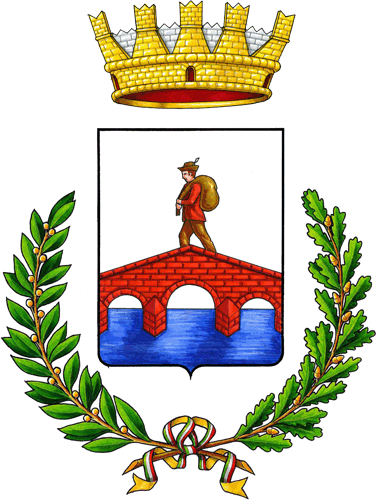
Ponsacco is a charming Tuscan municipality rich in history and charm, a stratification of different epochs and cultures, which developed along the Arno valley, between Pisa and Florence. Its territory, covering about 24 square kilometers, is inhabited by just over 11,000 residents and is located 26 meters above sea level. The name Ponsacco comes from the Latin words "Pons" and "Ad Axium", meaning "bridge" and "ford" respectively, referring to the key role that this place has played over time as a crossing point for travelers, merchants, and pilgrims. It is interesting to look back at its history to better understand the present of this place. Ponsacco developed between the 10th and 11th centuries, with the construction of a castle, ownership of which was contested between Pisa and Florence during the Middle Ages, a period in which these cities vied for control of Tuscany. The village, fortified with walls to protect the inhabitants from frequent raids at the time, has traced the lines of the historic center that can still be admired today. After various events, in the 15th century Ponsacco came under the control of Florence, beginning a period of stabilized cultural and economic growth that still leaves a mark today in the urban and social fabric. With the arrival of the Lorraine in the 18th century, Ponsacco experienced further flourishing, thanks to a particular focus on modernization and the development of the territory's structures. Communication routes were improved, thus encouraging both agriculture and local industry. This dynamic progress did not stop even during the period of Italian unification, which saw Ponsacco become a point of reference and meeting place for Tuscan patriots. In the 19th century, agriculture was accompanied by the development of the furniture industry, which led Ponsacco to become one of the reference points in Italy and beyond. It is also important not to forget the significance of the Cascina river, whose course marks the southern border of Ponsacco's territory and has been for centuries a reference point linked to agriculture and industry, contributing to the economic development of the country. As for traditions and culture, Ponsacco maintains a strong connection with the past. The local dialect, for example, represents a heritage to be preserved: originating from the 14th century, it still stands out today for its peculiarities, despite having been influenced by the Florentine language over the centuries. Similarly, the festivals and fairs, linked to both the religious and agricultural calendar, keep the history of the place alive and provide an opportunity for the community to come together and share. Ponsacco offers a harmonious blend of past and present, showing how it is possible to breathe new life into ancient traditions. It is a place where historical and cultural heritage merges with innovation, in a territory characterized by a strategic position among the main Tuscan cities.
No membership group specified.
The small Tuscan town of Ponsacco can boast a very lively and dynamic industrial fabric. Located in a strategic geographical position, in the heart of the region and close to the main communication arteries, it has been able to transform its historical and territorial peculiarities into an economic strength. One of the flagship sectors of the local economy is undoubtedly the furniture sector. Ponsacco boasts a centuries-old tradition in the production of quality furniture. Local companies have created a real industrial district in the sector, composed of a myriad of realities, including small artisan workshops and larger companies, all united by a passion for wood and attention to detail, unique design, and the quality of Made in Italy. In Ponsacco, there are numerous furniture companies that produce furniture for the home, office, and contract sector, exported worldwide. Another very relevant sector is that of precision mechanics. The mechanical industries of Ponsacco are known for their innovative capabilities and technical skills. These companies produce a wide range of components and mechanical parts used in various sectors, including automotive, aeronautics, electronics, and energy. Many of these industries are ISO-certifiable, guaranteeing precision and reliability in their processes. The territory of Ponsacco also hosts several food industries, a sector in which Tuscany boasts a long and renowned tradition. The production of fine wines, high-quality extra virgin olive oil, cured meats, and typical cheeses are the excellences of Ponsacco's food sector. Local companies have been able to combine traditional production techniques with modern technologies to ensure genuine, healthy, and high-quality products. In addition to industry, Ponsacco is characterized by a fabric of small and medium-sized enterprises operating in the trade and services sectors. This makes the town an important hub for the distribution of consumer goods and the provision of various services, with a significant impact on the local economy. In general, local companies in Ponsacco have demonstrated a remarkable ability to adapt to economic and technological challenges, thanks to continuous training, knowledge exchange, and innovation. This ability is partly due to the presence of training and research centers that work closely with companies, supporting the development of new ideas and technologies. In conclusion, Ponsacco represents an example of how a small town can play a decisive role in the regional economy, offering opportunities for development and economic growth not only for local businesses but also for the surrounding area. With such a varied and dynamic entrepreneurial landscape, Ponsacco is undoubtedly one of the most interesting municipalities from an economic point of view in the whole of Tuscany.
Located in the heart of Tuscany, Ponsacco is a municipality of 15,570 residents (data from 2023), with a slight female prevalence, spread over an area of almost 20 square kilometers of the Pisan plain, as suggested by the Agricultural Region Code 5006. The altitude of its center is 24 meters and it is neither a coastal nor an island municipality, as it does not have coastal areas. Ponsacco shows a degree of urbanization of areas with intermediate population density, making it ideal for investors interested in carrying out real estate projects, both residential and commercial, benefiting from a balance between space requirements and proximity to urban services. Real estate investors can also take advantage of the area's accessibility indices, with railway stations, access to the highway network, airports, and passenger ports all within a half-hour distance. The municipality boasts a decent amount of housing, 7,160 at the end of 2021, the majority of which are occupied, 6,393, with a residual 767 units unoccupied. These data indicate a lively real estate market, with growth potential given the presence of unoccupied housing. Moving on to the tourism sector, Ponsacco offers numerous accommodation options. It has two hotels with a total of 64 beds, 11 non-hotel structures, including 6 rental accommodations managed as businesses and 4 agritourisms, and a B&B with around 218 beds. Although there are no museums or similar institutions, these accommodation facilities, along with the beauty of the surrounding Tuscan countryside, are a strong draw for rural tourism, a sector on the rise. There is also a significant presence of foreigners in the municipality, with a total of 1,601 non-Italian residents. This foreign population, fully integrated into the social fabric, could be an additional attraction for international companies looking to expand in a context where linguistic and cultural diversity are already present and accepted. In summary, Ponsacco offers various opportunities for investors. The real estate sector can be particularly interesting, given the presence of unoccupied housing and the municipality's easily accessible location from major transport infrastructure. The tourism sector, although not supported by local cultural institutions, can leverage the beauty of the natural environment and the presence of a number of different types of accommodation facilities. Finally, the presence of an integrated foreign community opens up interesting prospects for businesses targeting an international clientele.
The town of Ponsacco, a charming Tuscan village located in the heart of the Arno Valley, halfway between Pontedera and Peccioli, is a place rich in history, culture, and traditions. Here are some of the main attractions of this picturesque Tuscan municipality. A key element of Ponsacco's culture is devotion to San Guido, the town's patron saint. Every year, to honor him, a large celebration is held on July 12th, the Feast of San Guido. On this day, visitors can enjoy typical local dishes, participate in religious celebrations, and enjoy a variety of shows and entertainment. Regarding religious architecture, Ponsacco boasts a number of interesting churches. The Church of San Giovanni Battista is certainly worth a visit, with its Romanesque structure and bell dating back to 1609. The Church of Santa Maria Assunta is also worth a visit, especially for its beautiful wooden door, richly inlaid and decorated. Finally, we cannot fail to mention the Oratory of San Guido, dedicated to the saint of the same name and linked to the religious and social history of the town. In addition to its religious buildings, Ponsacco also boasts several structures of historical and cultural interest. The Palazzo Comunale (Town Hall) is an elegant neoclassical building, the seat of the local government. Also worth visiting is Camugliano Castle, a prestigious 16th-century country residence and a fine example of Tuscan Renaissance architecture. The area surrounding Ponsacco is equally charming, dotted with charming rural settlements, such as the Fornace di Ponsacco, a historic brick factory, or the Convent of San Domenico a Rivoreta, a place of spirituality and tranquility. As for recreational activities, the town of Ponsacco hosts a calendar of cultural and traditional events throughout the year. In addition to the aforementioned Feast of San Guido, the town also hosts the Sagra della Zuppa (Soup Festival), an annual event celebrating the traditional Tuscan dish of bread and vegetables. Just like the winding streets and stone walls of its historic center, Ponsacco's culture and traditions are a fascinating blend of history and modernity. Its churches, historic buildings, charming rural landscapes, and lively festivals create a unique atmosphere that enchants every visitor.