San Marco d'Alunzio is a municipality located in the province of Messina, known for its historical heritage and panoramic location. The town sits approximately 450 meters above sea level, dominating the Naso River valley and offering a wide view of the Tyrrhenian Sea.
The village's origins date back to ancient Aluntium, during the Greek era, followed by Roman and Arab rule, which helped define the area's cultural and architectural identity. Over the centuries, the town has undergone various historical phases until it became part of the Kingdom of Sicily.
The urban layout of the historic center is characterized by a dense network of alleys and stairways that wind along the slope, enclosed by sections of medieval walls. The stone buildings and the presence of religious buildings from various eras give the area a high historical and environmental value.
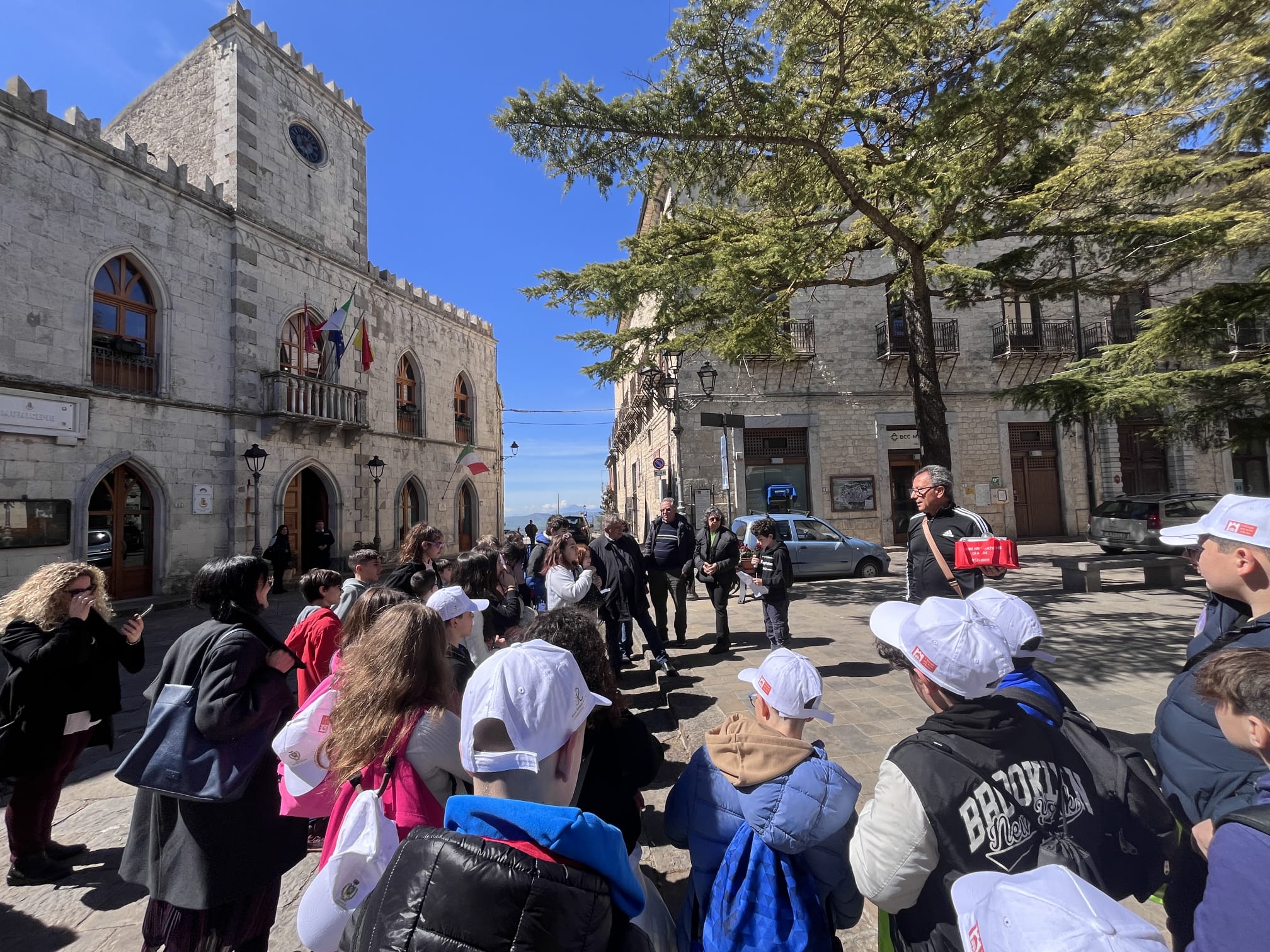
The main square is the hub of social and institutional life, hosting events and celebrations and housing important buildings, including the town hall, a testament to the municipality's administrative continuity.
The local gastronomic offering reflects the region's cultural stratification, offering traditional Sicilian specialties such as pasta with sardines, panelle, and cannoli, expressions of a cuisine rooted in local produce and historical influences.
The surrounding area offers further attractions, thanks to its proximity to the Nebrodi Park and the Tyrrhenian coast, which facilitate the development of activities related to nature and seaside tourism. The presence of hiking trails and cycling routes encourages active enjoyment of the landscape.
San Marco d'Alunzio is a center of significant historical and landscape interest, where the combination of cultural heritage and natural context contributes to a tourism offering geared toward enhancing the local identity.
 Associazione: Anci Sicilia
→
Associazione: Anci Sicilia
→
 Associazione: Borghi più belli d'Italia
→
Associazione: Borghi più belli d'Italia
→
 Gruppo di Azione Locale: GAL Nebrodi Plus
→
Gruppo di Azione Locale: GAL Nebrodi Plus
→
In San Marco d'Alunzio, the local business system plays a significant role in supporting the economy and preserving the local traditions. The productive fabric is primarily made up of small businesses, often family-run, operating in the areas of commerce, crafts, agriculture, and services.
The commercial sector is primarily structured through local shops, particularly in the food sector, offering fresh and typical local products. These businesses represent a point of reference for the community, ensuring quality and continuity in customer relationships.
Local crafts maintain a significant role, with workshops producing traditional products, including ceramics, textiles, and woodwork. These activities contribute to the transmission of historical skills and the enhancement of the village's cultural identity.
The agricultural sector is a fundamental component of the local economy. Farms cultivate typical Sicilian products, such as citrus fruits, olives, and grapes, favored by suitable climatic and environmental conditions. Their produce, often also destined for processing, fuels a high-quality agri-food supply chain.
The tourism sector is represented by accommodations and food service businesses, including bed & breakfasts, restaurants, and bars, which offer hospitality services and showcase traditional cuisine. The presence of scenic and historical-cultural resources helps sustain tourist flows throughout the year.
Completing the economic system are services, including professional firms, real estate agencies, and a variety of commercial establishments, which meet the needs of the resident population and support the functioning of the area.
The local businesses of San Marco d'Alunzio thus represent a complex economic system, capable of integrating tradition and development, contributing to the valorization of local resources and the preservation of the local identity.
The San Marco d'Alunzio area had a population of 1,818 inhabitants in 2023 and covers an area of 26.1407 km², making it a small town. The demographic structure shows a slight female predominance, with 953 women and 865 men, while the foreign component is marginal, equal to 48 residents.
The housing stock comprises a total of 1,537 units, of which 791 are occupied and 746 are unoccupied as of December 31, 2021. This real estate availability represents a potential area for recovery and enhancement initiatives.
The accommodation offering is limited: there is a three-star hotel with 10 rooms and 25 beds, supported by 7 non-hotel establishments offering a total of 130 beds. This situation highlights a still limited accommodation capacity compared to the area's potential.
From an economic perspective, the tourism sector appears to be susceptible to development, also thanks to the presence of local cultural resources, including two museums which, despite their modest visitor numbers (50 visitors in 2020), represent an attractive attraction. The presence of three rental accommodations managed as businesses also signals an interest, albeit initial, in forms of widespread hospitality.
The morphological characteristics of the area, with altitudes ranging from 300 to 899 meters, are favorable for the development of activities related to nature tourism and hiking, broadening the potential for enhancing the area.
San Marco d'Alunzio therefore appears to be a context with room for growth in the tourism sector, where targeted interventions could contribute to strengthening the accommodation offering and enhancing the available cultural and environmental resources.
San Marco d'Alunzio is a village located in the province of Messina, characterized by a significant historical heritage and a particularly beautiful landscape, making it a destination of cultural and natural interest.
Among the main attractions is Castello Gallego, a fortified structure of Norman origin located in a dominant position. The complex offers views of the surrounding area and preserves interior spaces that testify to the various historical periods of the village.
Also of notable interest is the Mother Church of San Marco d'Alunzio, a medieval building featuring significant architectural and decorative elements, representing a focal point for local religious and cultural life.
The surrounding natural setting further expands the area's offerings, thanks to the proximity of the Nebrodi Park, a protected area offering opportunities for hiking and the enjoyment of diverse natural environments, including woods, hills, and lakes.
The village experience is complemented by its food and wine tradition, offering typical Sicilian dishes, including pasta with sardines, caponata, and traditional sweets, an expression of the local culinary culture.
San Marco d'Alunzio is a place where historical, environmental, and cultural elements are integrated, contributing to a tourism offering geared toward enhancing the local identity.
 Fermate e treni straordinari per il Festival Amunì27 agosto 2026
 San Marco d’Alunzio bandiera arancione. Amata: premio all’eccellenza23 novembre 2024
 I Borghi più belli d’Italia di Sicilia si incontrano23 marzo 2024