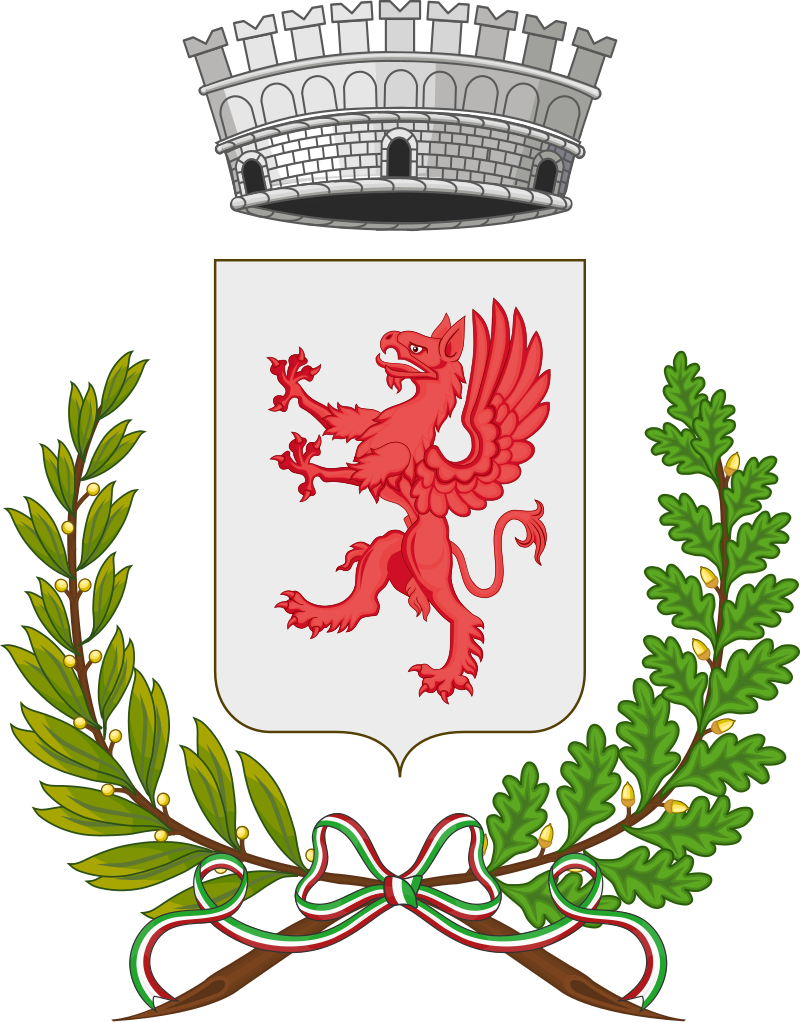
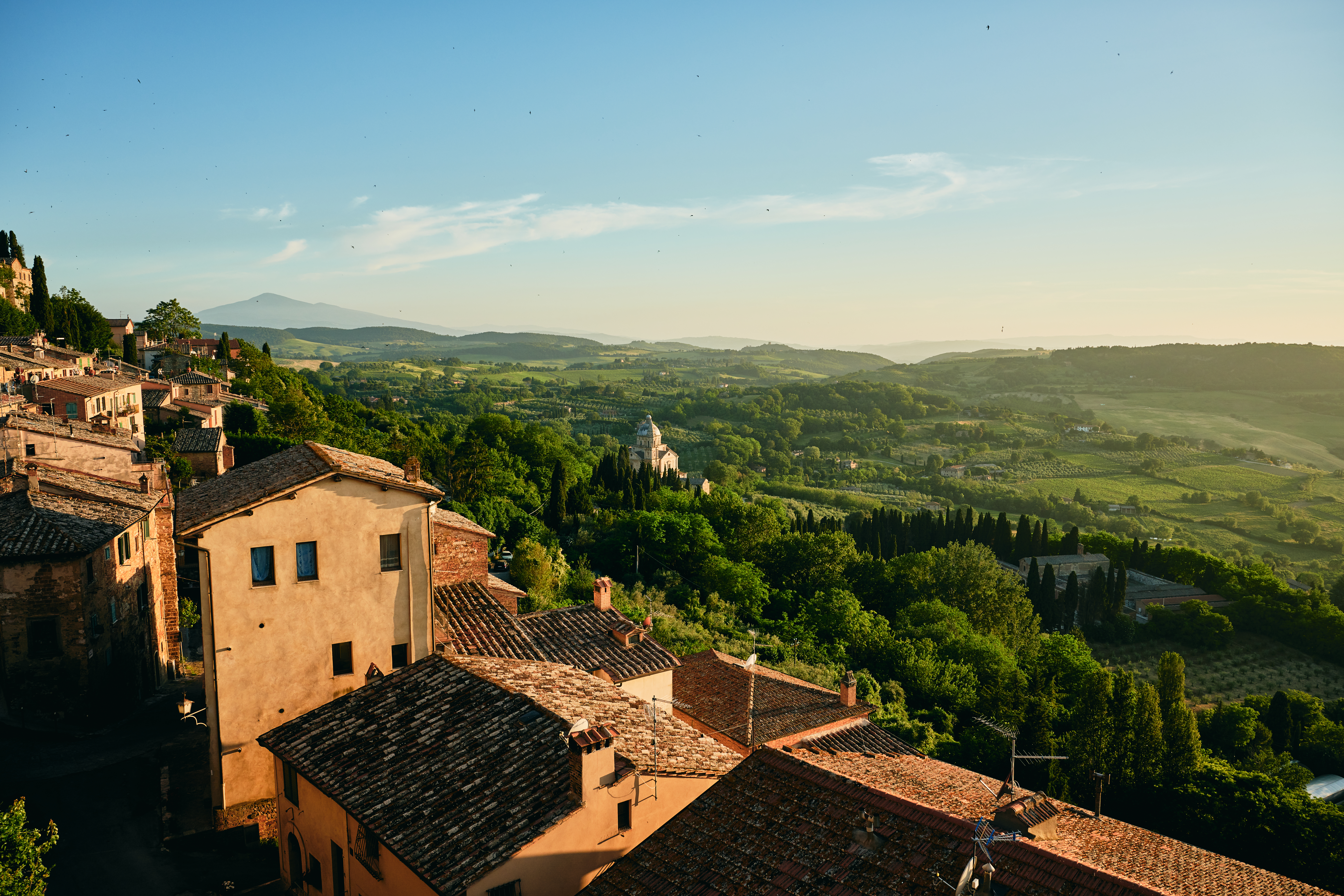
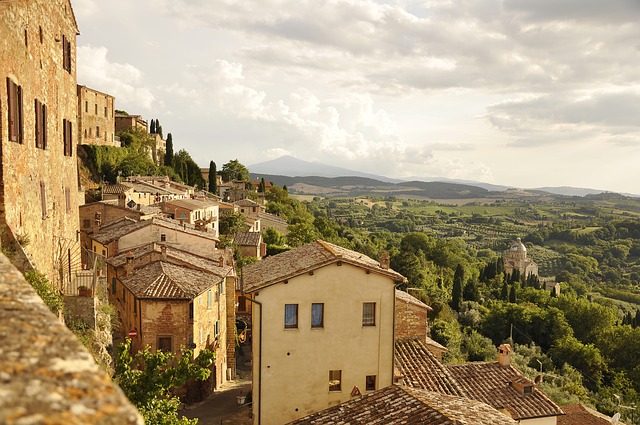
Montepulciano is an Italian municipality located in the province of Siena, in Tuscany. A significant gem in the crown of Italian art cities, Montepulciano is often praised for its morphological nature and excellent geographical position. It stands on a hill at 605 meters above sea level, between the green valleys of Val di Chiana and Val d'Orcia. Its spectacular panorama, characterized by rows of vineyards and cypress trees, extends to Lake Trasimeno and the Apennines. Eminently medieval and rich in splendid palaces, churches, and charming medieval alleys, Montepulciano can be described as a journey back in time, through a fresco rich in history and culture in the heart of Tuscany. The primary historical and cultural aspect of the city is its architecture, which has preserved its Renaissance charm intact. Montepulciano is known worldwide for its artistic treasures and for the Vino Nobile, one of Italy's most appreciated wines, produced from the vineyards surrounding the city's hills. These wines are renowned for their excellence and uniqueness, spreading Montepulciano's fame worldwide. One of the most famous points in Montepulciano's panorama is the church of San Biagio, a masterpiece of Renaissance architecture located at the foot of the hill on which the city stands. The historic center winds through a succession of streets and squares, among which Piazza Grande stands out, the heart of civic life and the focal point of the city's most important events. Here rises the Cathedral, a magnificent example of Renaissance sacred architecture, and the Town Hall, a Renaissance building inspired by the Palazzo della Signoria in Florence, symbolizing the strong bond between Montepulciano and the Tuscan capital. The city's historical structure is completed by medieval walls, ancient gates, and towers, both Frederickian and communal, all testimonies of Montepulciano's long and fascinating history. In the sixteenth century, the city became an important center of humanistic culture that saw the presence of numerous artists, poets, and scholars. The origins of Montepulciano date back to the Etruscan era. According to some documents, the city may even have mythical origins, linked to the figure of Porsenna, the ruler of Chiusi. Along the city's streets, one can still admire remains of Etruscan and Roman walls, which testify to the antiquity and importance of Montepulciano within the Etruscan domain. In addition to art and fine wines, the quality of life in Montepulciano is further enriched by the presence of natural thermal springs, with waters rich in health benefits, used since ancient times. The surrounding landscape of Montepulciano is a symphony of rolling hills, golden fields, and rows of cypress trees. The latter are particularly significant for the image of Tuscany over the centuries, and have contributed to making this region a jewel of the Italian landscape. Overall, Montepulciano offers an enchanting picture, a timeless scene of beauty that radiates a unique serenity.
No membership group specified.
Montepulciano is known not only for its artistic and cultural heritage, but also for its lively economic scene and rich and varied entrepreneurial profile. In the heart of Tuscany, the local businesses of this municipality have managed to keep tradition alive while embracing innovation. The wine sector is one of the cornerstones of the local economy. With its vast expanses of vineyards stretching as far as the eye can see, Montepulciano is the birthplace of Vino Nobile, one of the most appreciated wines internationally. Numerous local wineries, many of which are family-run, passionately dedicate themselves to the production of this wine, offering unique food and wine experiences such as cellar tours and tastings. But Montepulciano is not just about wine. Local agriculture also produces many other excellent products, such as Tuscan extra virgin olive oil, cured meats, pecorino cheeses, and legumes, which enrich the already rich food and wine offering of the municipality. Small agricultural companies focus on the cultivation and processing of these products, often using organic and sustainable methods. Another significant sector is craftsmanship, which represents a fundamental part of Montepulciano's identity. The artisan workshops, scattered throughout the historic center, are where ancient techniques and crafts are preserved and passed down. From wrought ironwork, to ceramics, to jewelry making, Montepulciano's artisanal products are the result of a unique savoir-faire and represent a true cultural heritage. Finally, the tourism sector plays an essential role in the development of the locality. Hotels, restaurants, agritourism establishments, and entertainment activities contribute to making Montepulciano an attractive destination for tourists, offering authentic and quality hospitality. These activities also generate significant revenue, creating job opportunities and contributing to the local economy. It is worth noting that many of these businesses are increasingly focusing on sustainability, adopting eco-friendly practices aimed at preserving the environment and the territory. In a world where standardization seems to be the norm, Montepulciano's entrepreneurial universe stands out for its authenticity and its ability to enhance its territorial identity, without ever losing sight of the importance of innovation. The local businesses of Montepulciano thus represent a model of dynamic local economy, capable of reconciling tradition and modernity, sustainability and economic development.
The municipality of Montepulciano, ISTAT code 52015, is a territory rich in investment opportunities, characterized by favorable aspects from a demographic, socio-economic, and tourist point of view. With a population of 13,173 inhabitants (6,327 males and 6,846 females), the municipal territory shows a gender balance with a slight prevalence of females. From a demographic point of view, the presence of a selected foreign community also stands out, composed of 1435 individuals, equal to 11% of the total population. The residential landscape of Montepulciano, with an area of 165.54 sq km, has 8,473 dwellings. Of these, the majority (5,869) are inhabited, while a portion (2,604) is unoccupied, presenting a potential opportunity for the real estate sector. The residential density of the territory is ample and diversified, offering ample space for new settlements. Montepulciano shines particularly in the tourism sector. With 213 active accommodation facilities and a total of 3521 available beds, the territory shows a high potential for hospitality. The accommodation structure is varied, with a significant offer of hotels (20 facilities, 874 beds), agritourisms (110, 1659 beds), and rental accommodations managed as entrepreneurial activities (70, with 844 beds). It is also worth noting the presence of a youth hostel and 11 other accommodation facilities, in addition to a B&B. The tourism sector could therefore welcome further investment opportunities. Culturally, the municipality is not far behind. The municipality of Montepulciano has a municipal museum, which recorded a total of 1460 visitors in 2020. There is a significant margin for growth in the cultural offering sector, which could be enhanced with new investments. The agricultural vocation of the territory is evident, with the majority of the area (54%) located in the Hills of the Upper Val di Chiana, an agricultural region with high potential. This is a solid starting point for investment in the agri-food sector, particularly for the development of local and organic productions. As for infrastructure, Montepulciano is not directly located on the coast or on an island, but it is well served by railway stations, highways, and airports. The nearest railway station can be reached in 32 minutes, the closest highway access in 22 minutes, and the nearest airport in 61 minutes. This means that the territory is easily accessible, a favorable characteristic for investors. In conclusion, the municipality of Montepulciano offers various investment opportunities, thanks to a solid socio-demographic structure, a wide range of accommodations, a growing tourism and cultural sector, and a well-developed infrastructure network. The real estate, tourism, cultural, and agri-food sectors seem to offer the best prospects for potential investment.
In the heart of Tuscany, straddling the Valdichiana and Val d'Orcia, Montepulciano is no ordinary village, but a capital of the Renaissance and wine, a place of austere and monumental beauty. Its fame is linked to its Vino Nobile, one of Italy's oldest and most prestigious red wines, but its soul is revealed in a magnificent piazza, in artistic masterpieces, and in the toil of one of Tuscany's toughest and most spectacular competitions.
The beating heart of the city is the spectacular Piazza Grande, a veritable Renaissance stage of incomparable beauty. Here, the symbols of power face each other: the imposing Palazzo Comunale, whose tower and crenellated façade proudly recall Florence's Palazzo Vecchio, and the unfinished and austere façade of the Cathedral of Santa Maria Assunta. Inside the Cathedral, bare but solemn, lies an absolute masterpiece of late Gothic painting: the monumental Triptych of the Assumption by Taddeo di Bartolo.
But the purest architectural jewel, the symbol of Renaissance perfection, is not in the village, but at its feet. Nestled in the countryside, stands the Temple of San Biagio, an absolute masterpiece by Antonio da Sangallo the Elder. This church, with a central plan and built of golden travertine, is a vision of harmony and perfection, a monument worth the trip alone and one of the finest expressions of 16th-century architecture.
The most authentic and passionate soul of Montepulciano explodes on the last Sunday of August with the "Bravìo delle Botti." This is not a simple race, but an epic and grueling challenge between the city's eight contrade. Two athletes from each contrada push heavy barrels weighing approximately 80 kg along a course of over a kilometer, all uphill, to the cathedral square in Piazza Grande. It is an overwhelming spectacle of strength, sweat, and parochialism, preceded by a magnificent historical parade with over three hundred participants.
The city's religious tradition is linked to its patron saint, Saint John the Baptist, whose feast day is June 24th, and to the figure of Saint Agnes Segni, a highly venerated local saint, to whom an important church is dedicated. In the summer, the city becomes an international cultural center thanks to the "Cantiere Internazionale d'Arte," a prestigious music and opera festival.
In conclusion, Montepulciano is a destination that amazes and enchants, a place where the nobility of the Renaissance and its wine blends with the toil and passion of a unique folk tradition. An authentic pearl of Tuscany, its grandeur, its art, and its proud, combative spirit captivate visitors.
 Montepulciano premiata con il Travellerer review awards 202620 aprile 2026
 Tra le città più accoglienti al mondo 2026 anche un’italiana09 febbraio 2026
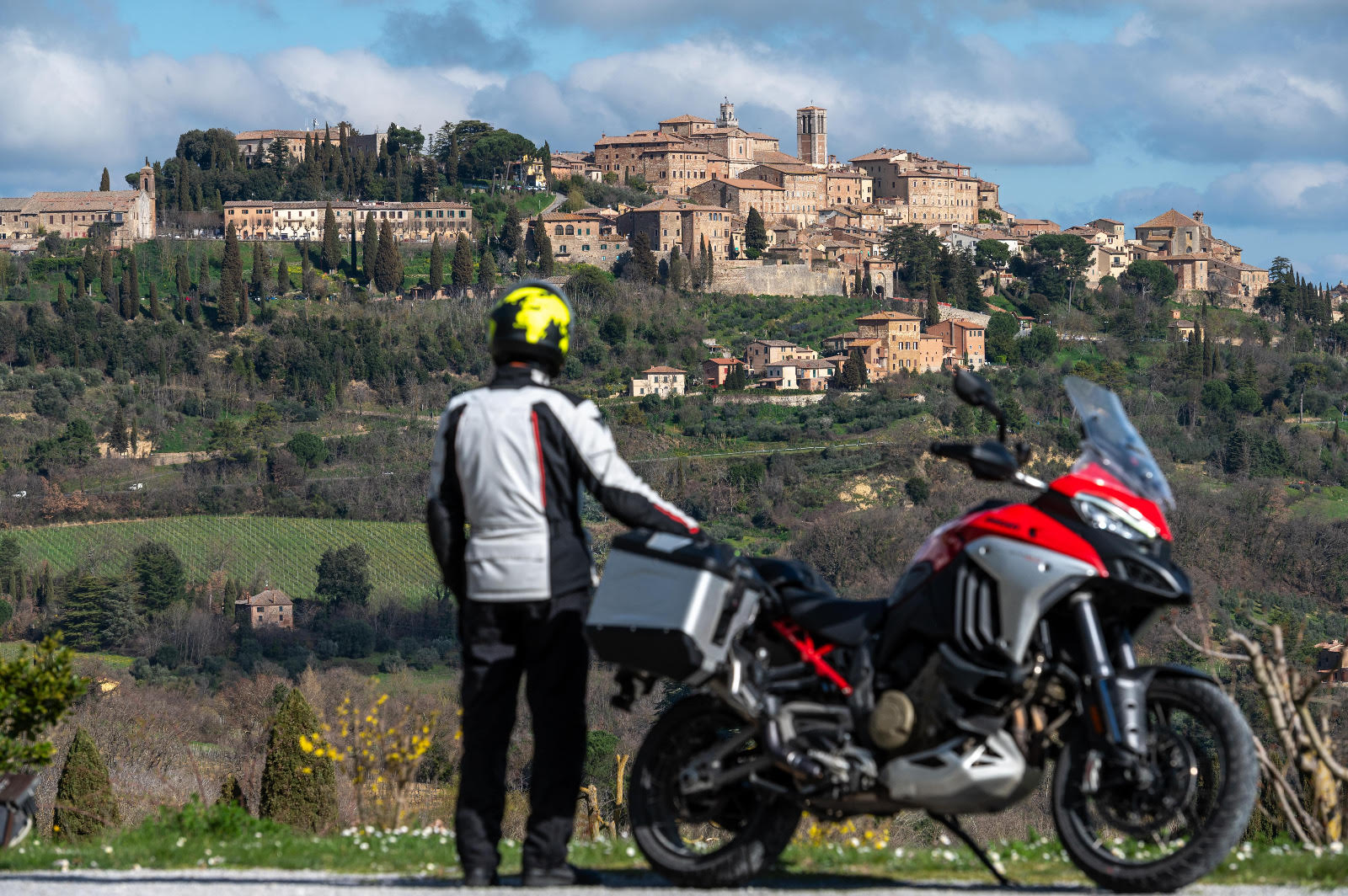 A Montepulciano il turismo è a misura di motociclista23 aprile 2025
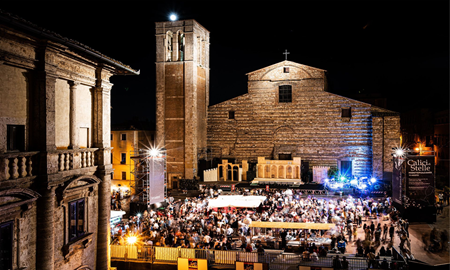 ll 10 agosto è ‘Calici di Stelle a Montepulciano’06 agosto 2024
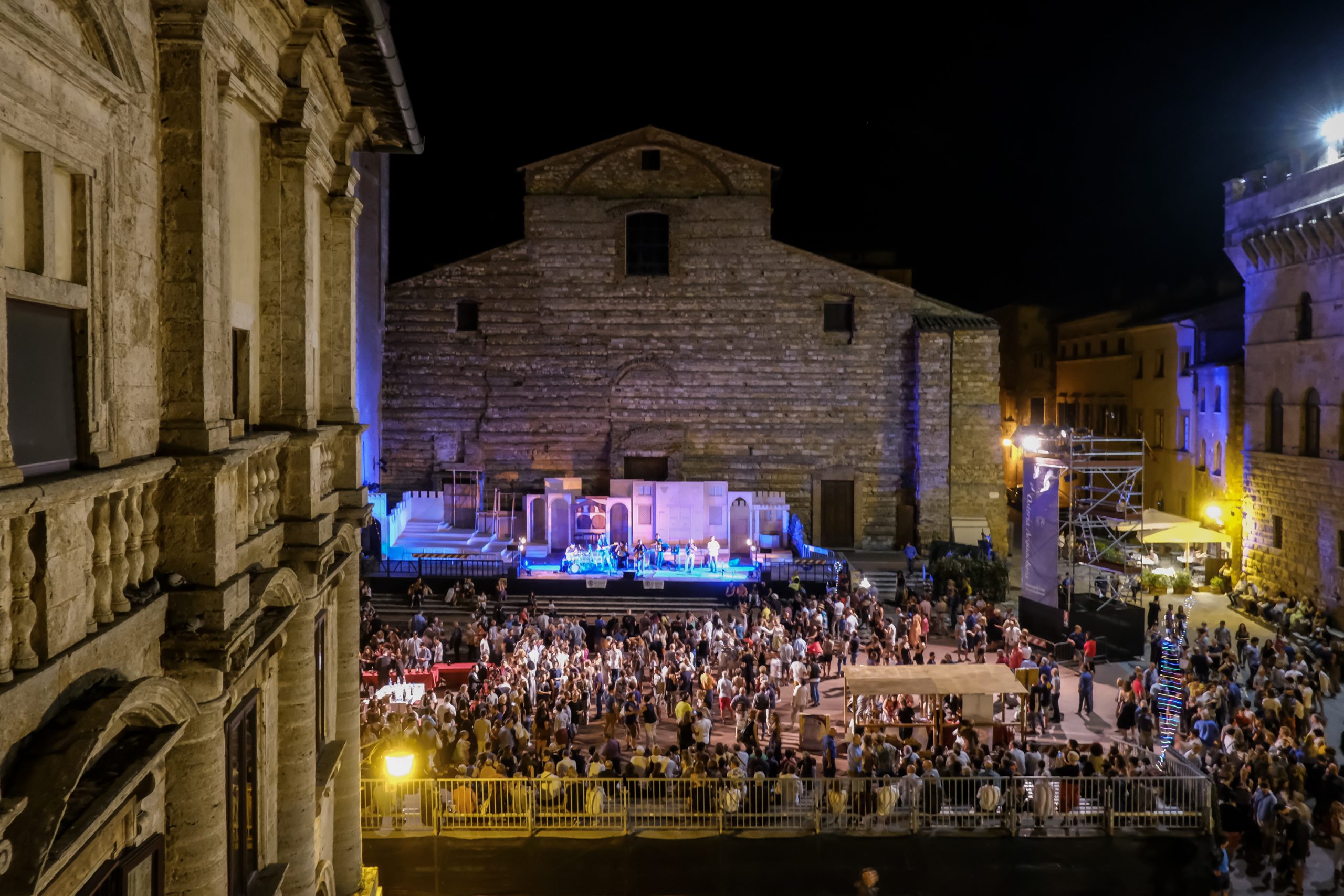 ll 10 agosto ‘Calici di Stelle’ è a Montepulciano21 luglio 2023
 Sharing Tuscany raddoppia: due giornate con oltre 50 operatori25 gennaio 2023