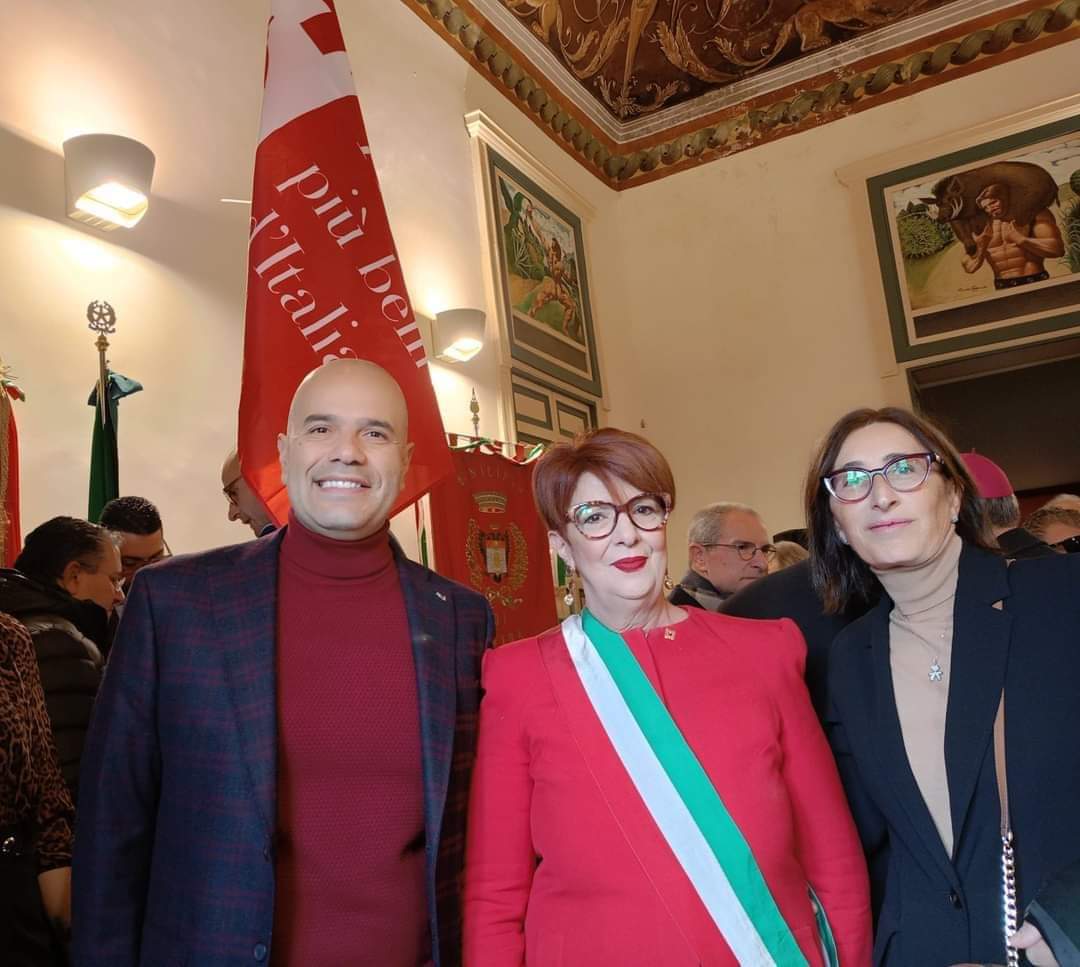
Agira is a municipality in the province of Enna, Sicily, located atop Mount Teja, with a panoramic view overlooking the Salso River valley and nearby Lake Pozzillo. The village's origins date back to the Paleolithic, but the ancient center, known as Agyrion, had strategic importance as early as the Greco-Roman era and was mentioned by historians such as Diodorus Siculus and Cicero.
The village retains a charming historic center, with cobbled alleys, ancient churches, and noble palaces that reflect the influences of various rulers, including Byzantine, Arab, and Norman. The Castle on Mount Teja, a medieval fortress, dominates Agira from above and offers panoramic views of the Sicilian hinterland and the surrounding mountains.
Agira is also known for its cultural and religious traditions, which are celebrated through local festivals and events throughout the year. Local cuisine highlights typical local products, such as olive oil, cheeses, and traditional desserts such as cassatelle, a symbol of Sicilian cuisine.
The village is part of the association I Borghi più Belli d'Italia (The Most Beautiful Villages in Italy), recognized for its rich history, artistic heritage, and scenic beauty, and represents an ideal destination for those wishing to discover authentic Sicily, amidst history, nature, and tradition.
 Associazione: Anci Sicilia
→
Associazione: Anci Sicilia
→
 Associazione: Borghi più belli d'Italia
→
Associazione: Borghi più belli d'Italia
→
 Gruppo di Azione Locale: GAL Rocca di Cerere
→
Gruppo di Azione Locale: GAL Rocca di Cerere
→
Agira is a Sicilian municipality with a vibrant economic fabric, characterized by numerous local businesses that actively contribute to the area's development. Among the most popular activities are artisan workshops, where ceramics, fabrics, and wooden objects are produced, keeping alive ancient traditions passed down from generation to generation.
Local commerce is well-established in the historic center, with shops offering typical products such as cheeses, cured meats, olive oil, and wine. Weekly markets are a meeting point for residents and visitors, allowing them to purchase fresh produce directly from local producers.
Agriculture plays a central role in Agira's economy, with farms growing cereals, vegetables, fruit, and olives. Local olive oil, renowned for its quality and authenticity, attracts buyers and tourists from across the region.
The tourism sector is constantly growing: bed & breakfasts, agritourisms, and restaurants offer hospitality and typical Sicilian cuisine, showcasing local products and promoting the region's gastronomic traditions.
Agira's businesses are often family-run, deeply rooted in the local area and connected to the community. Crafts, agriculture, and commerce are the driving forces of the local economy, based on the valorization of natural and cultural resources.
In an increasingly globalized context, Agira's local businesses are an example of resilience and sustainability, focusing on quality, authenticity, and environmental protection. Thanks to the passion and dedication of their workers, these businesses help keep traditions alive and promote the sustainable development of the area.
The Agira area, with a population of 7,632 in 2023, is balanced between males and females. The municipal area of 164.08 km² offers ample opportunities for development and investment. However, the presence of only 103 foreign residents could pose a challenge in terms of integration and cultural diversification.
As of December 31, 2021, there were 3,316 occupied homes, while 3,294 were unoccupied, for a total of 6,610 units. These data highlight a certain availability of properties on the market, offering interesting opportunities for real estate investments.
From a tourism perspective, Agira has a limited number of accommodations: there are no hotels and only 7 non-hotel establishments with a total of 38 beds. However, the presence of 3 bed & breakfasts and 1 agritourism business indicates a potential growth sector, particularly suited to rural tourism and charming hospitality.
The area's geographic characteristics, with altitudes ranging from 300 to 599 meters, offer opportunities for the development of activities related to nature tourism and hiking. Furthermore, the presence of three museums and cultural institutions offers an opportunity to enhance the historical heritage and attract visitors interested in local culture.
In conclusion, despite the still limited tourism infrastructure, Agira offers interesting investment opportunities in the real estate, tourism, and cultural sectors, thanks to its strategic location and natural and cultural resources. The area represents a favorable context for the development of innovative and sustainable projects, contributing to the economic and social growth of the local community.
Agira is a Sicilian town rich in history, culture, and nature, attracting visitors from around the world. Among its main attractions is Agira Castle, an imposing Norman fortress that dominates the surrounding landscape and offers breathtaking views of the town and the nearby mountains.
Another unmissable destination is the Mother Church of San Filippo, an extraordinary example of Sicilian Baroque architecture. Inside, you can admire frescoes and sacred artworks that recount the history and traditions of the town, making a visit an experience of great spirituality and beauty.
Agira also boasts a significant archaeological heritage, with sites such as the Necropolis of Realmese and the Greek Theater of Montagna di Marzo, testimony to the ancient civilizations that inhabited the area in past centuries.
For nature lovers, the Monti Erei Regional Park offers pristine landscapes, hiking trails, and the opportunity to observe local flora and fauna, fully immersing yourself in Sicily's natural beauty.
Finally, local cuisine is another of Agira's strong points: restaurants and trattorias offer traditional Sicilian dishes prepared with fresh, authentic ingredients, making every meal a unique and memorable experience.
Agira is a village that combines history, art, nature, and tradition, ideal for those who want to discover the authentic essence of Sicily and enjoy an unforgettable experience.