
Florence, one of the brightest pearls in the crown of Tuscany, is a city that combines ancient beauty and vibrant innovation at its best. Perched on the banks of the Arno River, Florence represents a historical, artistic, and cultural phenomenon of global resonance, whispering timeless stories to every tourist and inhabitant passing by. Considered the birthplace of the Renaissance, Florence is a true jewel of architecture, painting, and sculpture that captivates the senses. The works of masters such as Leonardo da Vinci, Michelangelo, Botticelli, Donatello, and many others laid the foundation for an unprecedented cultural and artistic development. But Florence is not only the beginning of the Renaissance; it is also the heart of the Italian language, as it was here that the great poet Dante Alighieri formulated the vernacular language that would become modern Italian. The city covers an area of over 102 square kilometers and is home to a population of approximately 382,000 residents. In addition to the resident population, Florence attracts a considerable number of university students and tourists from around the world, giving the city a multicultural and constantly bustling feel. Florence is also the beating heart of the Tuscan economy. Popular for its fashion industry, known worldwide and admired for its sophistication, Florence is characterized by a strong industrial and tourist sector. This city is not only a creative hub of ideas; it is also a driving force in Italian production, rivaling and in some cases surpassing the output of the country's major metropolises. However, the charm of Florence is not only about its glorious past or contemporary innovation. Its beauty also lies in the combination of these two forces, along with its magnificent natural landscapes. Nestled in the green Tuscan hills, the city offers breathtaking views and timeless romanticism. Florence's Mediterranean climate, with its hot, dry summers and mild winters, helps make the city an ideal place to live or visit at any time of year. Politically, Florence is the capital of Tuscany and serves as an important administrative center. The city is led by a mayor and a city council that make decisions on the daily management of the city, while the Province of Florence oversees broader issues involving the entire region. Florentine cuisine is equally impressive, with a variety of traditional dishes that emphasize fresh ingredients, simplicity, and robust flavors. Among the distinctive dishes are the Florentine steak, ribollita, and panzanella, which offer a taste of the vibrant land they come from. Florence is a city of immeasurable beauty and significance, whose influence extends far beyond Italian borders. Its streets, squares, buildings, and people all seem to carry the secret of ancient wisdom and beauty, a secret that makes Florence simply irresistible to the eyes of anyone who visits or calls it home.
No membership group specified.
In the heart of Tuscany, Florence is recognized for its rich history, roots in Renaissance art, and decadent cuisine. In addition to these peculiarities, Florence is also an important economic center, where a wide range of local businesses keep traditional craftsmanship alive and support modern technological and service industries. One of the strong symbols of the Florentine economy is represented by the fashion and luxury sector. Global brands like Gucci, Salvatore Ferragamo, and Roberto Cavalli have their roots in Florence, where they have created imposing fashion empires. These companies are linked to the Florentine tradition of leatherworking and craftsmanship, keeping alive a unique heritage. At the same time, Florence is famous for its production of unique and refined jewelry, creating works of art in precious metal for centuries. The jewelers of Ponte Vecchio offer high-quality products, which are living examples of craftsmanship. No less important is Florence's contribution to the global wine scene. With its fertile land and mild climate, the Florence region produces some of the finest wines in Tuscany, including the unmistakable Chianti. Local wineries have a significant influence on the local economy, with the production and marketing of their refined wines worldwide. Florence is also a fervent center of innovation and technology, with several tech companies driven by visionary entrepreneurs and creatives. The startup incubator Nana Bianca and innovative tech companies like Datrix, FreedomLab, and Wafer, pioneers in microchip creation, testify to the vitality of this sector. The service sector is another pillar of the Florentine economy. Tourism-related activities occupy a prominent place, with a multitude of hotels, restaurants, and tour operators offering personalized services to the millions of visitors who flock to the city every year. The financial and banking industry is equally thriving, with the presence of prominent institutions like Banca CR Firenze and the Italian Banking Association. We cannot forget the importance of traditional craftsmanship, a sector that preserves Florence's creative uniqueness and mastery. The art of leatherworking, artistic ceramics, marbled paper production, and the creation of artistic glass productions are just some of the skills that Florentine artisans have kept alive through the centuries. Florence represents a fascinating fusion of past and present, reflecting this aspect clearly in its economy as well. Its numerous businesses reveal a dynamic and multifaceted set of activities, capable of uniting ancient traditions and contemporary innovations, thus contributing to making Florence a unique and fascinating city.
The municipality of Florence, with its ISTAT Code 48017, presents itself as a territory rich in investment opportunities in both the real estate and tourism sectors, with a total population of 208,380 inhabitants in 2023, divided between 17,137 males and 191,243 females. In addition to the demographic analysis, there is a significant presence of a foreign community, totaling 136,343 people, with a slight female predominance. The geographical area, characterized by a territorial extension of approximately 3,513.49 sq km, offers ample opportunities for development in various sectors, especially considering the substantial housing supply, which amounts to 522,372 units as of December 31, 2021. Of these, 444,731 are occupied, while 77,641 are vacant, providing significant room for investment in the real estate sector. Florence is widely recognized as a world-famous tourist destination, rich in historical, artistic, and cultural heritage. This is confirmed by the numbers: in 2020, the 68 museums and similar institutions in the city attracted 2,739,047 visitors. Consequently, the hospitality sector is well developed: there are a total of 3,823 accommodation facilities with a total of 59,506 beds. The variety of accommodation options ranges from hotels of various categories, to campsites, agritourism farms, holiday homes, modern bed & breakfasts, and youth hostels. Hotels are the most popular choice, with a total of 30,113 beds. Outside the hotel context, the offer diversifies, from the development of 3,291 rental accommodations managed as businesses, to the 20 youth hostels offering a total of 2,712 beds. Geographically, Florence is strategically located, with altitude bands mainly between 0 and 299 meters above sea level, and an altitude of the city center of 50 meters. Despite not being coastal, the city is easily accessible, with the train station reachable in just 5 minutes, access to the highway network in 18 minutes, the airport in 20 minutes, and passenger ports in 71 minutes. Florence, classified as a densely populated area, also has significant potential in the agricultural sector, being located in the Hills of Florence, an agricultural region with code 4806. Investments in agritourism or the production of wine and olive oil, typical products of this region, could be considered. In conclusion, the territory of Florence offers a multitude of investment opportunities, ranging from real estate to tourism, to the agricultural sector, thanks to its demographic, historical, cultural, and geographical richness.
In the heart of Tuscany, Florence is not a simple municipality or a glittering jewel. It is the cradle of the Renaissance, the Athens of Italy, a city that forever changed the history of the Western world. Its soul lies not in a single monument, but in its widespread beauty, in the legacy of immortal geniuses like Michelangelo, Leonardo, and Brunelleschi, and in a proud and passionate spirit that still manifests itself today, between the magnificence of art and the brutality of an ancient game.
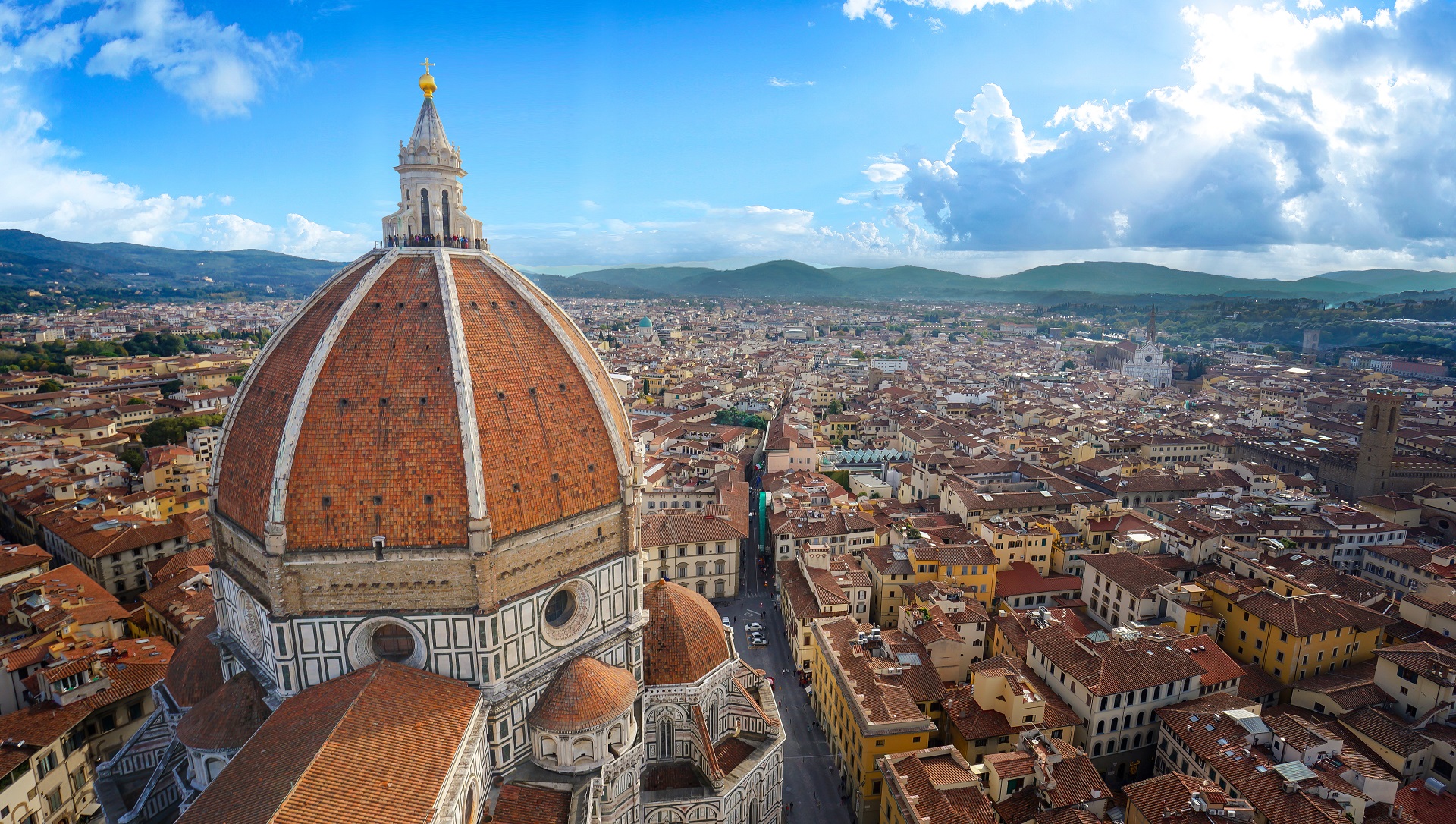
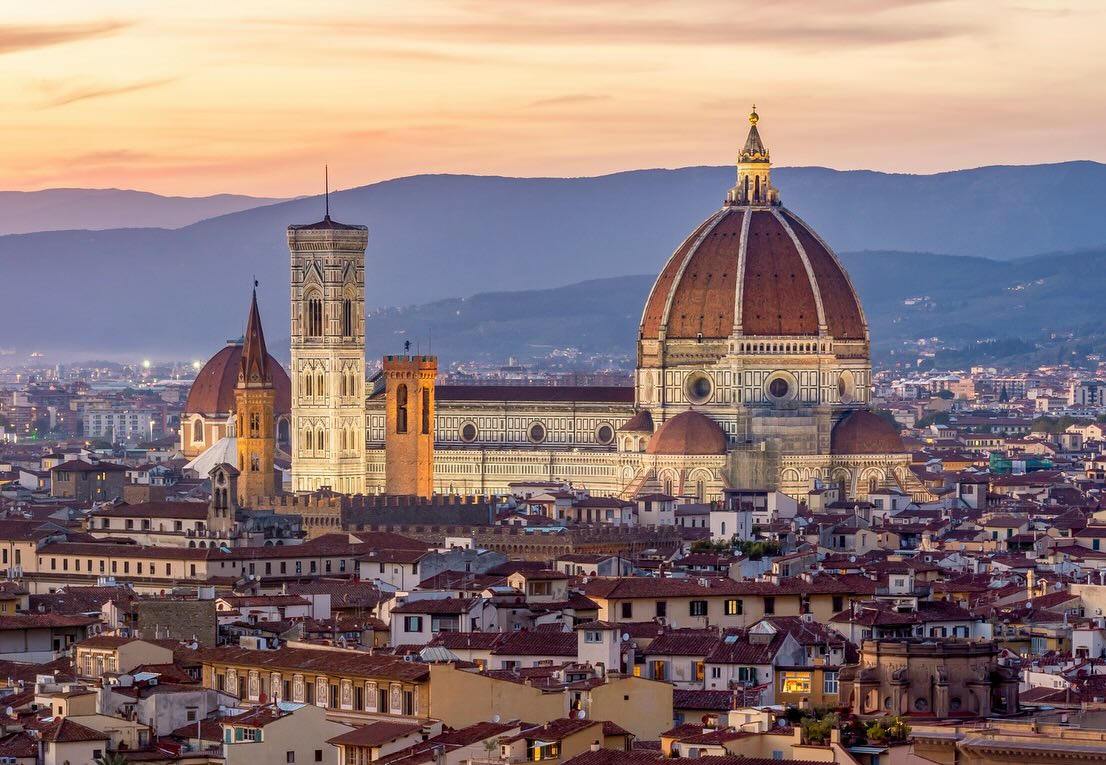
The true, grand, and unmistakable heart of Florence is its Duomo, the Cathedral of Santa Maria del Fiore. But its symbol is not its façade. It is Brunelleschi's Dome, a marvel of engineering and beauty that has dominated the city skyline for six hundred years. Climbing to its lantern is not a simple visit, but a pilgrimage, an ascent to the heavens that rewards you with a breathtaking view and the knowledge of standing before an absolute masterpiece of human ingenuity. Nearby, Giotto's Bell Tower and the Baptistery of San Giovanni, with its golden Gates of Paradise, complete one of the most beautiful squares in the world.
But the soul of Florence is also preserved in its galleries. The Uffizi Gallery is no ordinary museum. It is the temple of Renaissance art, a place where you can come face to face with Botticelli's "Birth of Venus" and Leonardo's "Annunciation," in a total immersion in beauty. And a short distance away, the Galleria dell'Accademia houses an icon, a symbol of perfection and strength that alone is worth the trip: Michelangelo's David.
The most visceral, violent, and passionate soul of Florence, however, is unleashed in Piazza Santa Croce in June with the "Calcio Storico Fiorentino." This is no simple reenactment. It's a battle, a fusion of rugby, boxing, and Greco-Roman wrestling played in 16th-century costumes, in which the city's four historic districts (Azzurri, Bianchi, Rossi, and Verdi) vie for victory with a fervor rooted in ancient and profound roots. It's a brutal and fascinating spectacle, a ritual that celebrates the city's proudest and most indomitable spirit.
The city's most heartfelt celebration, however, is that of its patron saint, St. John the Baptist, on June 24th. The day culminates with the "Fochi di San Giovanni," a grandiose fireworks display launched from Piazzale Michelangelo, illuminating the Arno and the entire city in a night of pure magic. And on the Arno, another enduring symbol of Florence: the Ponte Vecchio, the only bridge spared by the bombings of World War II, with its goldsmiths' shops glittering suspended over the water.
In conclusion, Florence is not a city to visit, but an experience to live. It's a constant dialogue with beauty, an encounter with the ghosts of giants who have shaped our way of seeing the world. It's the thrill of a glimpse of David, the vertigo of the Dome, and the passion of a match that's more than a game. It's an eternal city, one that never ceases to speak to the heart and soul.
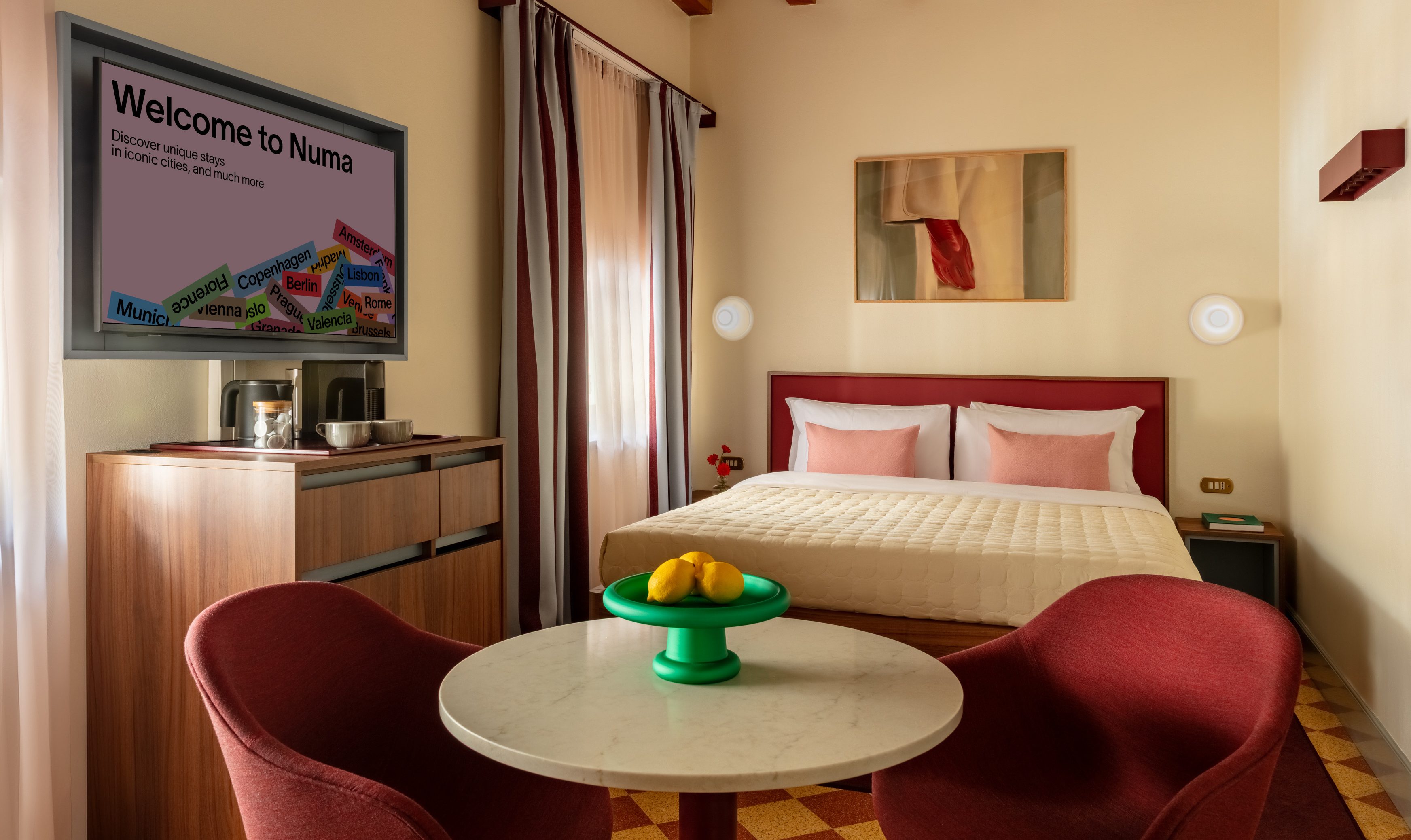 Numa si espande in Italia con 5 nuove aperture tra Roma, Milano e Firenze30 settembre 2026
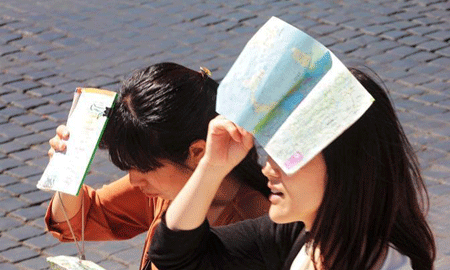 Fiavet lancia l’allarme: caldo record minaccia l’incoming 202730 settembre 2026
 Affitti brevi: Tar respinge sospensiva, restano in vigore regole29 settembre 2026
 Cciaa Firenze rifinanzia bandi ‘negozi sicuri’ e ‘turismo green’09 settembre 2026
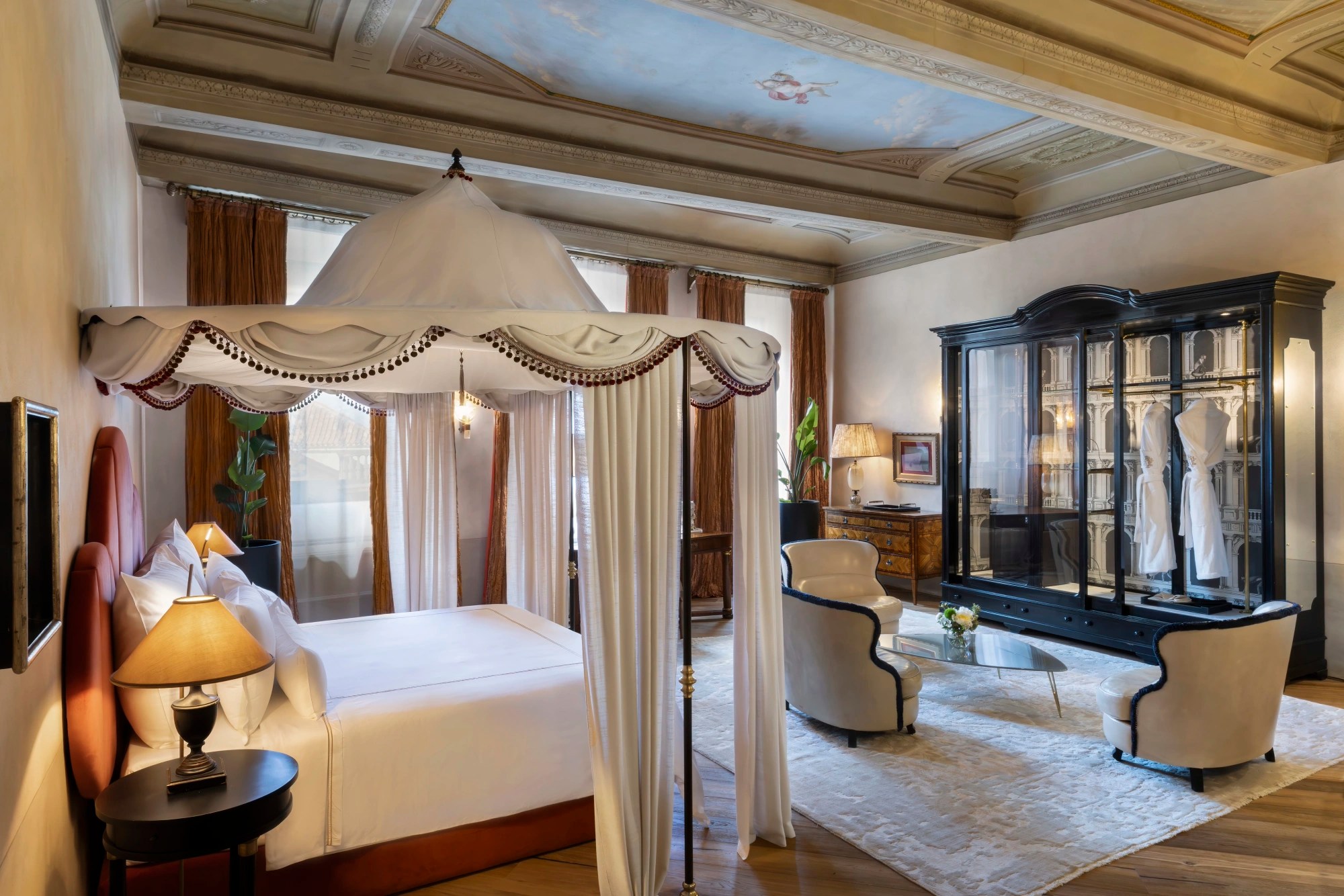 Opificio, Setificio, Scuola del Cuoio: la filiera che rifornisce gli interni di Firenze07 settembre 2026
 Firenze celebra la Festa della Rificolona il 7 settembre02 settembre 2026
 Alla scoperta del Parco Monte Ceceri, alle porte di Firenze25 agosto 2026
 A Firenze non solo turisti ma anche lavoratori e studenti06 agosto 2026
 I ‘Serial Killer Museum’ aperti per tutto il mese di agosto03 agosto 2026
 Federalberghi: 2026 incerto ma possiamo sperare27 luglio 2026