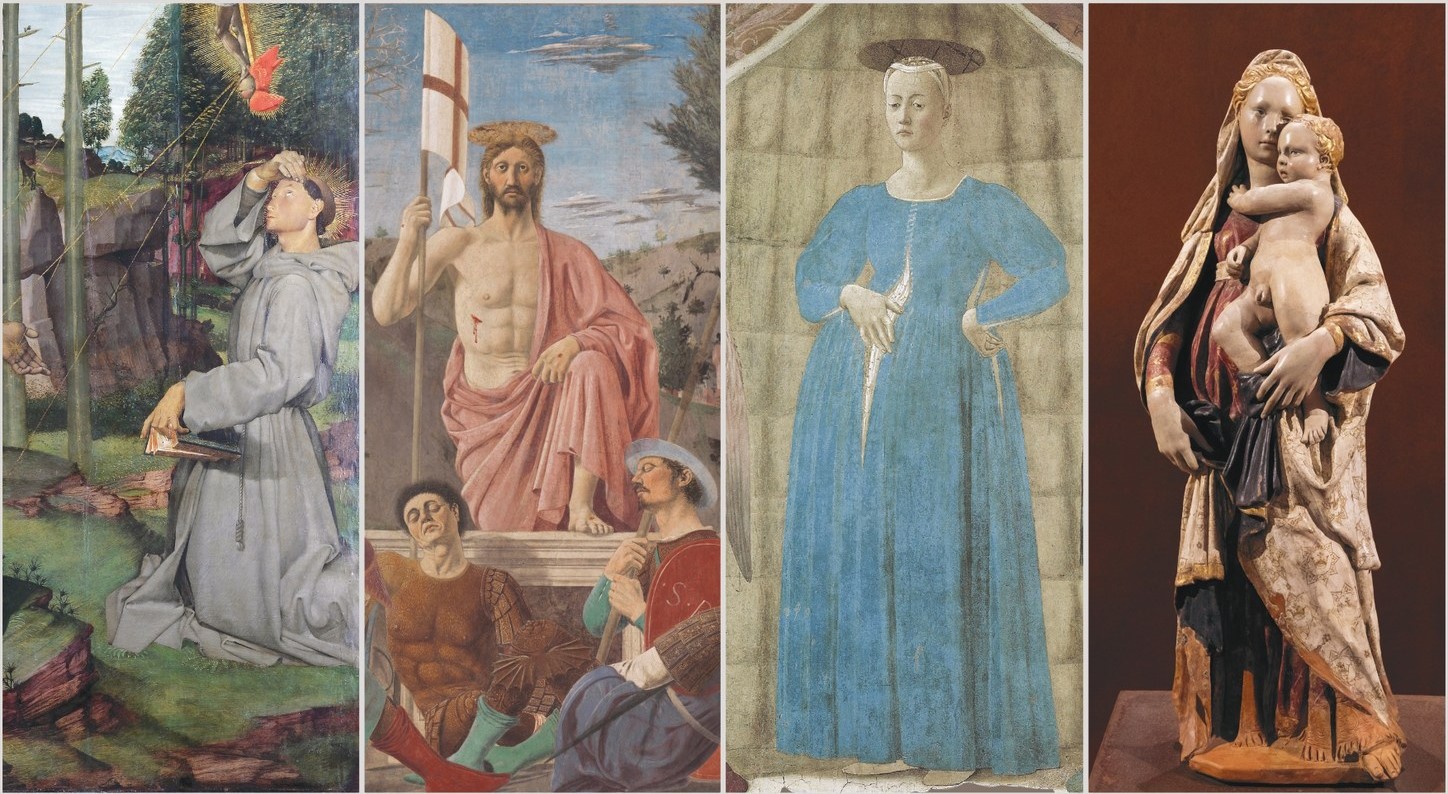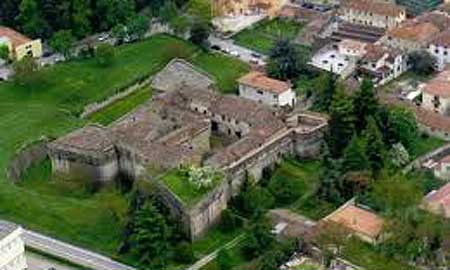
Sansepolcro, a splendid pearl nestled in the heart of Tuscany, skillfully combines natural beauty, ancient history, and rich culture in the harmonious balance that makes it one of the most fascinating places in Italy. Located in the eastern part of the region, Sansepolcro gently rests at the foot of the Tuscan-Romagnolo Apennines, surrounded by a symphony of soft hills and lush forests. From this wonderful position, the view opens up to breathtaking landscapes that have inspired artists and poets for centuries. The name Sansepolcro derives from its historical and religious roots, being a shortening of the ancient name "Borgo Sancti Sepulchri," or "Borgo of the Holy Sepulchre." According to legend, Sansepolcro was founded in the 9th century by Arcano and Egidio, two pilgrims returning from the Holy Land. They would have brought with them a sacred stone from the Holy Sepulchre of Jerusalem, around which the first nucleus of what would become the harmonious city of today would have arisen. Sansepolcro played a significant role in the history of Tuscany, maintaining a prominent position during the Middle Ages and the Renaissance period. It was an important economic and commercial center, favorably positioned along major communication routes, a natural intersection between Emilia Romagna, the Marche, Umbria, and Tuscany itself. To prove the importance of this center, the fact that throughout its history it has been contested by various state entities, from Florence to Perugia, from the Holy See to the State of the Presidi. Despite these changes of hands, Sansepolcro has maintained its unique cultural identity, reflected in its unmistakable architecture and its lively artistic tradition. The city can be proud of its illustrious sons, among whom Piero della Francesca stands out, one of the most renowned painters of the Italian Renaissance. But not only that: Sansepolcro has also given birth to famous musicians, historians, and a Nobel Prize winner in medicine. Culture, art, and music are central themes in the daily life of Sansepolcro, which boasts such a cultural liveliness as to deserve the appellation of "city of culture." Every year, the municipality hosts numerous art, music, theater, and dance events that enliven the historic center and its suggestive buildings. In local gastronomy, the flavors of the Tuscan land prevail. Traditional dishes reflect a love for agriculture and the products of the land, keeping alive a culinary tradition linked to the territory and its riches. Living in Sansepolcro means immersing oneself in a unique atmosphere, where time seems to have stopped to preserve an identity and a cultural heritage of immense value. But at the same time, the city looks to the future, always ready to renew itself and embrace innovations, keeping an eye on sustainability and the well-being of its community. This dynamic and attentive character makes Sansepolcro a perfect combination of tradition and modernity.
No membership group specified.
Sansepolcro, the pearl of Tuscany, is home to a variety of small and medium-sized businesses that contribute to the local economy, creating a dense fabric of production and entrepreneurship, closely linked to the traditions and natural resources of the area. In Sansepolcro, agriculture reigns supreme, with farms often run by families or cooperatives that have been dedicated to producing typical Tuscan gastronomic products for generations. Among the main specialties are high-quality olive oil and wines, honey, cheeses and cured meats, including the famous Finocchiona IGP. The resources of the territory are also exploited for the cultivation of vegetables, legumes, and truffles, processed both fresh and in precious preserves. The local farms often welcome tourists and visitors to their facilities, offering tastings, guided tours, and educational activities to showcase the production processes and techniques used. There are numerous educational farms and agritourisms that allow visitors to experience nature and the rhythms of the countryside. The craft sector is also strong in Sansepolcro, expressed in wood, wrought iron, leather, ceramics, and textiles. The artisan workshops are the beating heart of the historic center, where expert craftsmen work with precious materials to create furniture and fashion accessories loved by both locals and tourists. The industrial sector of Sansepolcro, while not predominant, boasts some prominent companies linked to specific sectors. For example, there are leading companies in the packaging and food machinery production sectors. The economic fabric of Sansepolcro is also enriched by a lively service sector, including small and medium-sized businesses in the restaurant, commerce, tourism, and professional services sectors. In particular, tourism plays a crucial role in the local economy, thanks to the charm of the town nestled among the green Tuscan hills and the richness of its historical and artistic heritage. Hotels, bed & breakfasts, restaurants, wine bars, and shops selling typical products contribute to creating a warm and authentic welcome, allowing visitors to discover the tradition and culture of the place. Finally, the construction and restoration sector cannot be overlooked, as it plays a prominent role in Sansepolcro due to the presence of numerous historic homes and buildings, as well as the potential linked to tourism and the enhancement of the architectural heritage. In conclusion, Sansepolcro offers a varied and dynamic economic landscape, where tradition merges with innovation and respect for the environment.
The municipality of Sansepolcro, with the ISTAT code 51034, covers an area of approximately 91.19 square kilometers nestled among the hills of the Upper Tiber Valley in the agricultural region 5104. Located at an altitude of 330 meters, the municipality offers a varied landscape, predominantly hilly, with over 60% of the territory lying between 300 and 599 meters above sea level. As of 2023, the population of Sansepolcro is 15,120 inhabitants, with almost equal distribution between males (7424) and females (7696). Among these, 1723 are foreigners, a component that can bring an additional element of diversity and vitality to the local social context. The housing stock of the municipality consists of a total of 8,221 dwellings, of which 6,652 are occupied and 1,569 are unoccupied, indicating a margin of growth in the local real estate market that could interest investors in this sector. In terms of urbanization, Sansepolcro is defined as an area with intermediate population density, a situation that can offer a balance between the economic development opportunities typical of urban centers and the livability typical of less densely populated areas. Furthermore, its geographical location and distances from the main services - 38 minutes to railway stations, 44 to highway access points, and the same to reach airports - make it easily accessible and able to offer good mobility opportunities. The tourist accommodation in Sansepolcro is distributed among various types of structures. As of 2021, in addition to the 7 hotels, there are 16 rental accommodations, 12 agritourisms, and a small number of bed and breakfasts and other accommodation facilities. All this allows for a total of 773 beds, which could be enhanced to meet an increasing demand for quality tourism. Sansepolcro's tourist offer is further enriched by 5 museum institutions that attract a significant flow of visitors (18,718 in 2020). Probably, the greatest investment opportunities are linked to these centers of interest, with a particular focus on the cultural tourism sector and quality hospitality. In fact, there are still growth opportunities in the hotel accommodation sector and in the sector of services and activities related to the enjoyment of cultural assets and natural beauties of the territory. In conclusion, the municipality of Sansepolcro, due to its location, demographic structure, cultural heritage, and variety of accommodation opportunities, represents an interesting territorial context with good development potential. Any critical issues, such as the lack of direct connections such as railway stations or airports in the municipality, do not seem to hinder, but rather could promote a more selective tourism that is attentive to the authenticity of the places, a characteristic increasingly sought after by travelers.
Nestled in the enchanting heart of Tuscany, the town of Sansepolcro embodies a unique blend of culture, history, and spirituality. The town's elegant urban layout, bathed in a delicate golden light that accentuates its charm, hosts a precious array of monuments and cultural activities that make it a regional highlight. Sansepolcro owes its foundation to the veneration of Saint Sepulchre, whose relics are preserved in the city's cathedral. The Cathedral of Sansepolcro, dedicated to Santa Maria Assunta, is a precious jewel of Romanesque architecture in Tuscany. Its imposing bell tower accentuates the delicate façade, while the interior houses marvelous works of art, including a 13th-century wooden crucifix and a valuable triptych by the renowned Tuscan painter Rosso Fiorentino. In addition to the cathedral, Sansepolcro boasts numerous other churches. Among these, the Church of Sant'Antonio Abate stands out, containing exquisite medieval frescoes, and the Church of San Lorenzo, a place steeped in spirituality and history. The Church of San Rocco is famous for its fresco cycle created by Gerino da Pistoia, one of the most famous artists of the Renaissance. Among the town's extraordinary attractions is the Porta di Romagna, an ancient gateway to the city still preserved in all its splendor. Also not to be missed is the Abbey of Montecasale, a place of retreat for meditation donated to the Franciscans by Frederick II in 1213. The Sansepolcro Civic Museum is a true reference point for appreciating the city's artistic heritage. It houses works by internationally renowned artists such as Piero della Francesca, Raffaellino del Colle, and Santi di Tito. Among the numerous works, Piero della Francesca's Resurrection of Christ and the Polyptych of Mercy are particularly noteworthy. Sansepolcro's local traditions are vibrantly celebrated throughout the year. The most important event is the Palio della Balestra, a historic competition held on the second Sunday of September, pitting the town's residents against each other in a crossbow contest. The Torneo della Rosa (Rose Tournament) is a medieval-themed historical reenactment held in May. But the spirit of Sansepolcro is also revealed through its festivals, which celebrate the area's typical products. The most famous is the Sagra della Pagnotta (Loaf Festival), an unmissable event for those who wish to savor authentic Tuscan food and wine traditions. Sansepolcro is a fascinating blend of history, art, and culture that will amaze you with its rich offerings, the beauty of its monuments, and the uniqueness of its traditions. A gem nestled among the Tuscan hills, it preserves a priceless heritage, ready to captivate the hearts and souls of those willing to discover it.