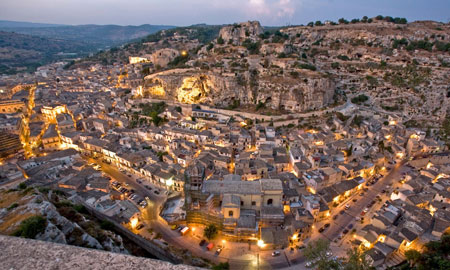
Monterosso Almo is a municipality located in the province of Ragusa, Sicily, within the Val di Noto, an area characterized by a significant historical and cultural heritage. The town's origins date back to Roman times, when it was known as Mons Rubeus, a reference to the unique color of the land. Over the centuries, Arab and Norman rule have helped define the town's architectural and cultural identity.
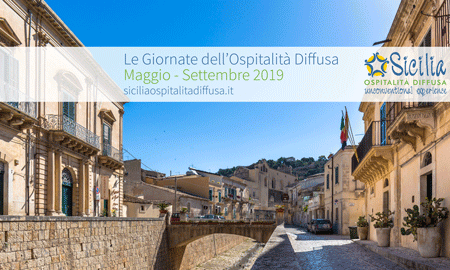
The historic center features a traditional urban layout, with narrow, winding streets, historic buildings, and numerous examples of Baroque religious architecture. Among the main points of interest is the Mother Church of San Giovanni Battista, which houses works of artistic value.
From a food and wine perspective, the area is an expression of Sicilian culinary tradition, based on the use of local ingredients such as extra virgin olive oil, vegetables, and cheeses. Local cuisine includes typical dishes and traditional sweets.
Religious traditions are a significant element of identity, with a calendar of festivities that includes celebrations dedicated to the patron saint, St. John the Baptist, accompanied by public events and community gatherings.
The surrounding natural setting is characterized by agricultural landscapes and Mediterranean scrub, offering opportunities for outdoor activities, including hiking and nature trails.
These elements combine to define a region with a strong historical and cultural identity and a consolidated relationship between the environment, traditions, and the local community.
 Associazione: Anci Sicilia
→
Associazione: Anci Sicilia
→
 Associazione: Borghi più belli d'Italia
→
Associazione: Borghi più belli d'Italia
→
 Gruppo di Azione Locale: GAL Natiblei
→
Gruppo di Azione Locale: GAL Natiblei
→
Monterosso Almo is a Sicilian municipality characterized by a local business community that plays a significant role in supporting the local economy. These businesses offer a diverse range of products and services, catering to both residents and visitors.
The commercial network includes small businesses, artisan workshops, and restaurants that showcase local gastronomic traditions. Among the most representative products are olive oil, cheeses, cured meats, and traditional sweets, reflecting the quality of local production.
Alongside the food sector, the area boasts businesses specializing in clothing, footwear, and household goods, helping to meet the community's daily needs.
The local economic system also includes a network of professionals and artisans operating in various fields, offering technical and specialized services. These include technicians, construction workers, and skilled artisans, who support the area's manufacturing and residential activities.
Tourism-related activities also play a significant role, including non-hotel accommodations and accompanying services, which contribute to the enjoyment of local cultural and natural resources.
Overall, the local business system demonstrates a complex and deeply rooted structure, capable of supporting the economic and social functioning of the municipality.
The Municipality of Monterosso Almo, with a population of 2,750 inhabitants in 2023, shows a substantially balanced demographic distribution between males and females. The area covers 56.5504 km² and includes a structured housing stock, with 1,261 occupied dwellings and 964 unoccupied units as of December 31, 2021, indicating potential availability for residential and tourism-related uses.
The presence of 50 foreign residents reflects a relatively low level of internationalization, while also suggesting opportunities for attracting new demographic flows and external investments.
From a tourism perspective, there is an absence of hotel facilities, alongside a limited number of properties available for rental on an entrepreneurial basis. This situation highlights a potential area for development, particularly in the field of alternative accommodation.
The morphological characteristics of the territory, with altitude levels mainly between 300 and 899 meters, are suitable for the development of nature-based tourism and outdoor activities.
From a cultural standpoint, the lack of museum institutions represents a limitation, but also identifies a potential area for targeted investments aimed at enhancing local heritage.
Overall, the territorial context presents favorable conditions for the implementation of targeted development strategies, particularly in diversifying the tourism offer and enhancing available resources.
Monterosso Almo is a municipality in the province of Ragusa, Sicily, listed among the most beautiful villages in Italy and characterized by a significant historical and landscape heritage.
The town's main attraction is its historic center, which extends along a complex urban layout, with narrow streets and stone buildings that retain the imprint of local tradition. The Sant'Antonio and San Giovanni neighborhoods are particularly interesting, thanks to their historic architecture and panoramic views.
Among the main cultural attractions is the Mother Church of San Giovanni Battista, a building of note for its architectural features and interior decorations. Next to it is the Church of Sant'Antonio, which contributes to the town's artistic heritage.
The surrounding area is nestled within the Hyblaean Mountains and offers opportunities for outdoor activities, including hiking and nature trails. Of particular importance is the Calaforno Hypogeum, an archaeological site consisting of artificial cave dwellings dating back to prehistoric times, which represents one of the most significant examples of the local archaeological heritage.
From a food and wine perspective, the municipality promotes a tradition linked to local agricultural products, particularly cheeses, legumes, and baked goods. Local specialties include homemade wood-fired bread and scacce, typical Sicilian dishes.
The local context is characterized by a balanced combination of historical heritage, natural resources, and production traditions, which underpins its territorial recognition.